The world of diffraction gratings is characterised by extraordinary precision, significant capital investment, and decades of accumulated expertise. Whilst these optical components are fundamental to spectroscopy across countless applications, only a handful of companies worldwide possess the comprehensive capabilities required to serve this market effectively, from master fabrication through high-volume replication.
A rare combination of capabilities
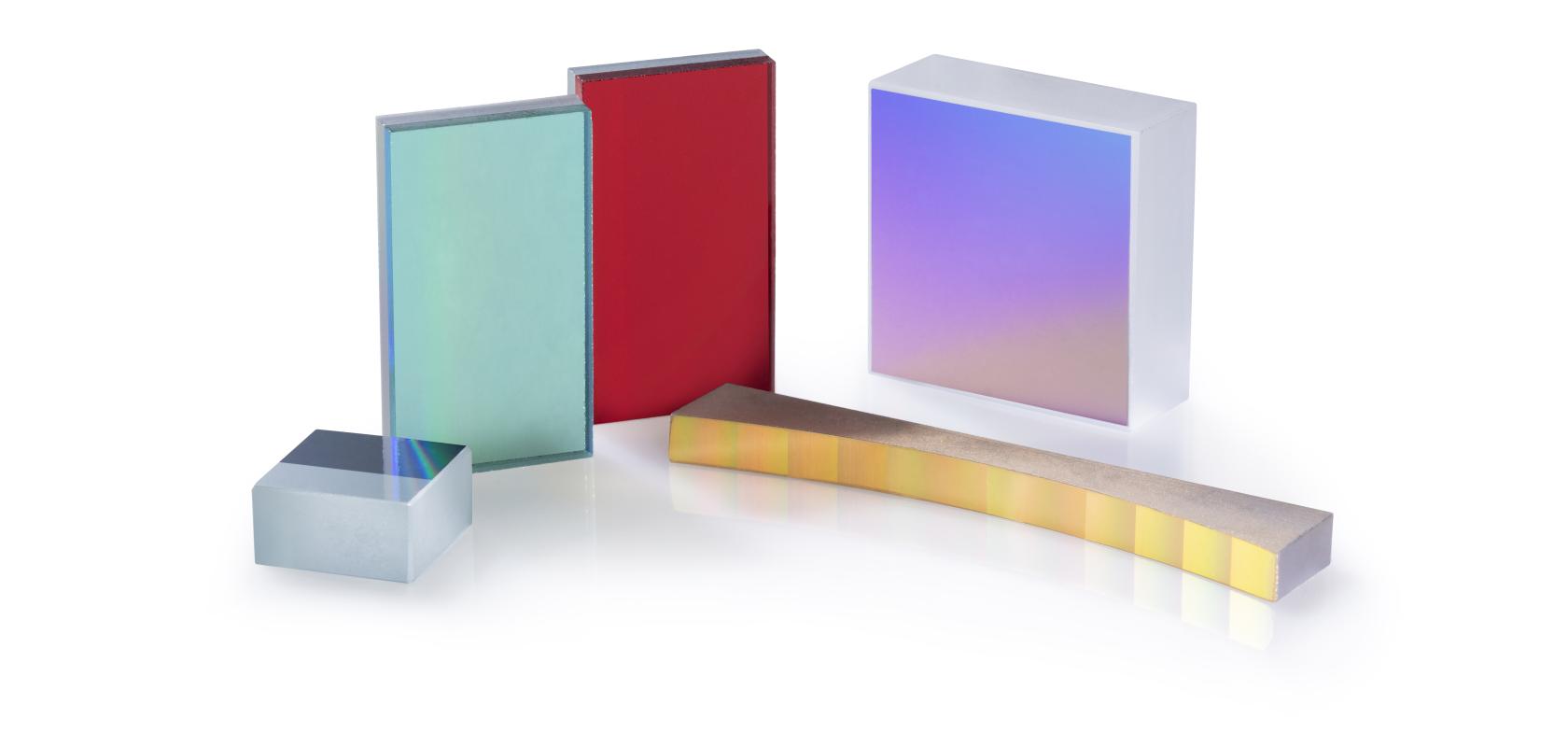
Omega Optical stands amongst this select group, maintaining in-house capabilities for both ruled and holographic master grating production alongside replication facilities. This vertical integration, encompassing the entire production lifecycle, remains exceptionally uncommon in the industry.
"We are one of a handful of companies in the world that have replication in-house," explains Craig McDermott, Application & Technology Specialist at Omega Optical. "And one of the even fewer that have ruling and customisation capability in-house.”
The barriers to entry help explain this scarcity. "A ruling engine to manufacture ruled masters is a big investment," McDermott notes. "Typically a seven-figure or larger investment."
Beyond the capital requirements, ruling engines create gratings one groove at a time, a process that can extend over days or weeks depending on specification. For a 1200 grooves per millimetre grating, this demands maintaining sub-micron precision across millions of individual operations.
Holographic masters, created through laser interference patterns in photoresist, offer faster production but introduce different challenges. "They're fragile," Rob Holmes, Senior Account Manager, observes. "You need experience of handling and lifetime, the longevity of them."
The library advantage
Beyond manufacturing capability, Omega Optical benefits from another critical asset: an extensive library of master gratings accumulated over six decades in the industry. This library delivers immediate value to customers whilst highlighting the difficulty of entering the gratings market.
"We have a whole list of master gratings that we can pull from," Holmes explains. "So we have a huge added value that is just built up over time for making masters. Our deep master grating library lowers our barrier to entry and allows us to support customers with huge NRE needed."
For customers developing prototypes or exploring new applications, this library enables rapid iteration without prohibitive investment at each stage. When specifications align with existing masters, projects can proceed immediately to replication, dramatically reducing both cost and timeline.
Replication: democratising spectroscopy
Whilst master fabrication represents the pinnacle of precision optics manufacturing, replication through micro-moulding processes makes spectroscopy economically accessible to broader markets. Replication creates precise mirror images of master gratings, enabling high-volume production whilst preserving optical performance.
"Our replication technology is extremely repeatable and we're the lowest cost manufacturer for these gratings pretty much in the world," Holmes states. This cost advantage, combined with quality and precision, enables customers to experiment and iterate during product development without excessive financial risk.
The benefits extend beyond pure economics. “Our extensive master library enables some customisation without large NRE costs.” McDermott adds. This flexibility proves particularly valuable during prototyping phases, when specifications may evolve as system designs are refined.
Solving the UV challenge
Customer collaboration frequently drives innovation in grating technology, as demonstrated by Omega's development of deep UV (DUV) compatible gratings. The challenge arose from a fundamental limitation in traditional replication materials.
"With traditional replication materials, they have issues with solarization," Holmes explains. "When they're exposed to UV, they degrade and they stop transmitting in the UV." This photochemical breakdown progressively reduces transmission, ultimately rendering transmission gratings ineffective.
When a customer approached Omega with solarized gratings and asked whether anything could be done to improve UV durability, the company responded by developing an entirely new product using different replication materials. "We transitioned to an alternative replication material which enhanced UV durability and in turn increased light transmission deeper into the UV,” Holmes notes.
The results proved significant. "Typically, traditional replication materials transmit down to 300 nanometres,and these gratings transmit down to 200 nanometers," Holmes reports. The application, inline spectrometers measuring coating thickness on mobile devices during manufacturing, demonstrates the practical impact of material innovation.
"Working with the customer, we developed a new product that gave them longevity and performance and gave us a new product to go to market with," Holmes says. "That technology and that product lowers the cost barrier to entry for UV transmission grating based spectrometers."
The importance of early engagement
Perhaps the most consistent message from Omega's team concerns timing. Engaging with grating suppliers early in the design phase, rather than after optical systems are fully specified, delivers substantial benefits.
"So many times someone will design their system and they'll say to me, 'I need a 372-grooves-per-millimetre grating,' but they don't have the budget for non-recurring engineering or customisation," McDermott explains. "Having the conversation with us early allows us to offer solutions from our library that we can replicate immediately,' which really helps reduce cost or allows us to guide you in a better direction."
This collaborative approach extends beyond grating specifications to encompass the entire optical system. "Gratings don't exist alone in a system and we cover so many other optics within these systems," Holmes points out. "Speaking of getting in early in the design phase, we can absolutely collaborate on the other portions: windows, lenses, filters, and assist with the mounting of these items as well."
The company's capabilities extend to replicated mirrors, which use the same micro-moulding processes as grating replication to deliver low surface roughness for UV applications or FTIR systems, often at lower cost than diamond-turned alternatives.
Value beyond cost
Whilst Omega's position as a low-cost manufacturer provides clear competitive advantage, the company's value proposition encompasses much more than price.
The combination of comprehensive in-house capabilities, accumulated expertise, extensive master libraries, and genuine partnership approach creates a unique offering in the marketplace.
"Our new projects with some of our biggest customers are built on the principle that you're the lowest cost person and we need that for our application," Holmes acknowledges. "But it's not just about being cheap. It's about the best value for money because you've got the quality and precision and you've got the partnership."
For customers navigating the complexities of spectroscopic system design, this partnership approach proves invaluable. Access to engineering expertise, flexibility in prototyping, collaborative problem-solving, and the ability to source multiple optical components from a single supplier all contribute to successful project outcomes.
The path forward
As spectroscopic applications continue expanding into new markets and technologies, the fundamental characteristics of the gratings industry remain largely unchanged. High barriers to entry, significant capital requirements, and the critical importance of accumulated expertise ensure that comprehensive capabilities remain concentrated amongst a small number of established players.
For system designers and product developers, this landscape emphasises the importance of selecting partners carefully and engaging them early in the development process. The difference between success and costly iteration often lies not in the gratings themselves but in the expertise, flexibility, and collaborative spirit of the companies producing them.