When Raymond LaCroix Sr. left his position as foreman at Bell and Howell in 1947, he did what many returning servicemen dreamed of. He bought surplus equipment and started his own business. In a rented space in Chicago, he began producing volume spherical optics. What he couldn't have known was that he was founding a company that would still be thriving and expanding nearly 80 years later.
Today, LaCroix Precision Optics operates from a purpose-built facility in Batesville, Arkansas, USA, led by third-generation president Kirk Warden. The company employs 220 people and has just completed its fifth expansion, adding 19,000 square feet to bring the total facility to 65,250 square feet. But despite this growth, something fundamental hasn't changed: LaCroix remains a family business built on relationships, continuous improvement, and investing in people.
A family legacy
The company's journey from Chicago to Arkansas tells a story of loyalty and problem-solving, which still defines LaCroix today. In the 1960s, two of the company's best opticians were brothers who moved from Arkansas to work in the Kirkland, Illinois, facility. The brothers were ready to move back and start their families.
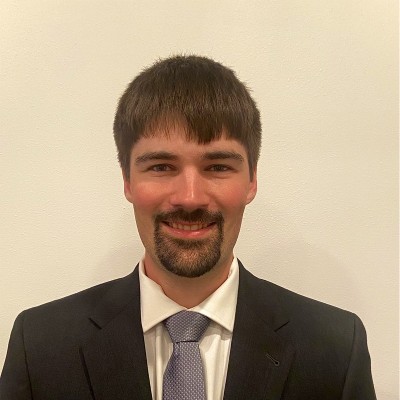
"These two guys were some of their best employees, really good opticians. So, they asked if they would take some excess equipment and set up a branch plant," recalls Sam Burchfield, Customer Service Manager (Pictured).
The branch plant first opened in Batesville in 1966. Ten years later, the LaCroix family made a decisive move: relocate everything to Arkansas, as they could see opportunity in a new area. They built the facility that still houses the company today, starting with 12,500 square feet in 1976.
Raymond LaCroix Jr. assumed the presidency when his father passed away in 1985, steering the company through decades of technological evolution. In 2018, he appointed his son-in-law Kirk Warden as President, while remaining Chairman of the board. "I love that it's grown to be such a successful business and still maintains its family roots," Burchfield notes. "You don't hear that very often anymore."
The compelling advantage: prototype to volume without outsourcing
While LaCroix's history matters, what truly distinguishes the company is its current capability. Over the past 30 years, LaCroix has evolved from a volume spherical shop into what Burchfield calls "a prototype to volume partner" – and that transformation represents something increasingly rare in North American manufacturing.
"There are a lot of companies that can make prototype optics very well," Burchfield explains. "There's not a lot that can go from that prototype to volume in one facility. That's really our compelling advantage."
This isn't about juggling subcontractors or managing supply chains either: LaCroix keeps everything in-house. The company manufactures custom optics across a comprehensive range: spheres, aspheres, doublets, windows, wedges and prisms. Thin-film coatings span from 250nm to 2500nm (UV to SWIR), while material selection encompasses all visible glass types, including Schott and Ohara optical glass, fused silica, fused quartz, float glass, and filter glass.
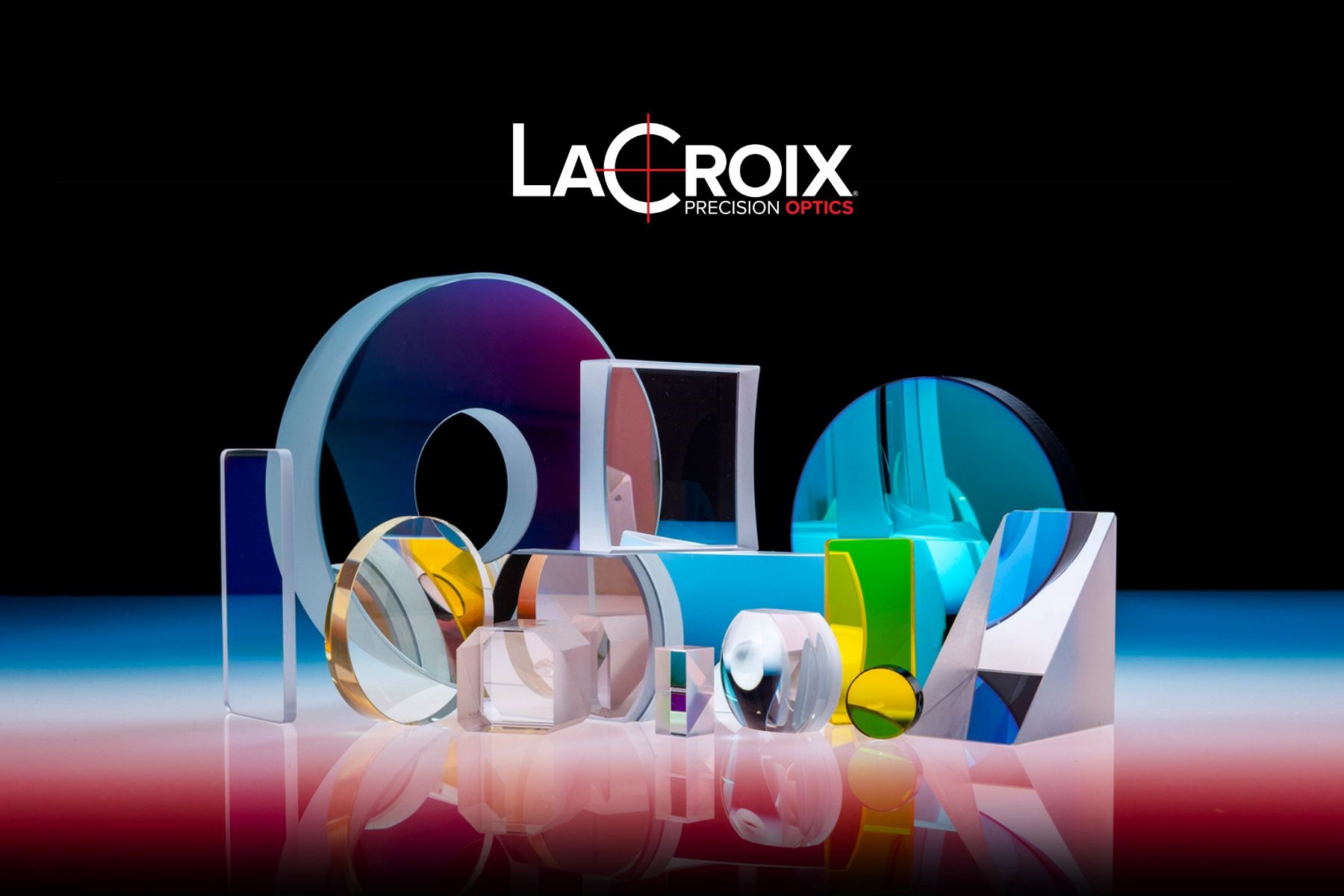
This breadth of capability matters immensely to customers developing new optical systems. Many companies excel at either prototyping or volume production, but few can handle both seamlessly without outsourcing. The ability to work with a customer from initial concept through multiple prototype iterations and into full production, all within one facility, with one team, eliminates the supply chain complexity and quality risks that come with transitioning between suppliers.
Vertical integration and supply-chain security
LaCroix's vertical integration extends beyond optical manufacturing. The company maintains in-house coating capabilities, recently added optical assembly services in 2024, operates its own machine shop for tooling, and handles everything from design for manufacturability consultation through final assembly. With ISO 9001:2015 certification and ITAR registration, the company serves the most demanding customers in defence and other regulated sectors. The in-house tooling capability particularly stands out.
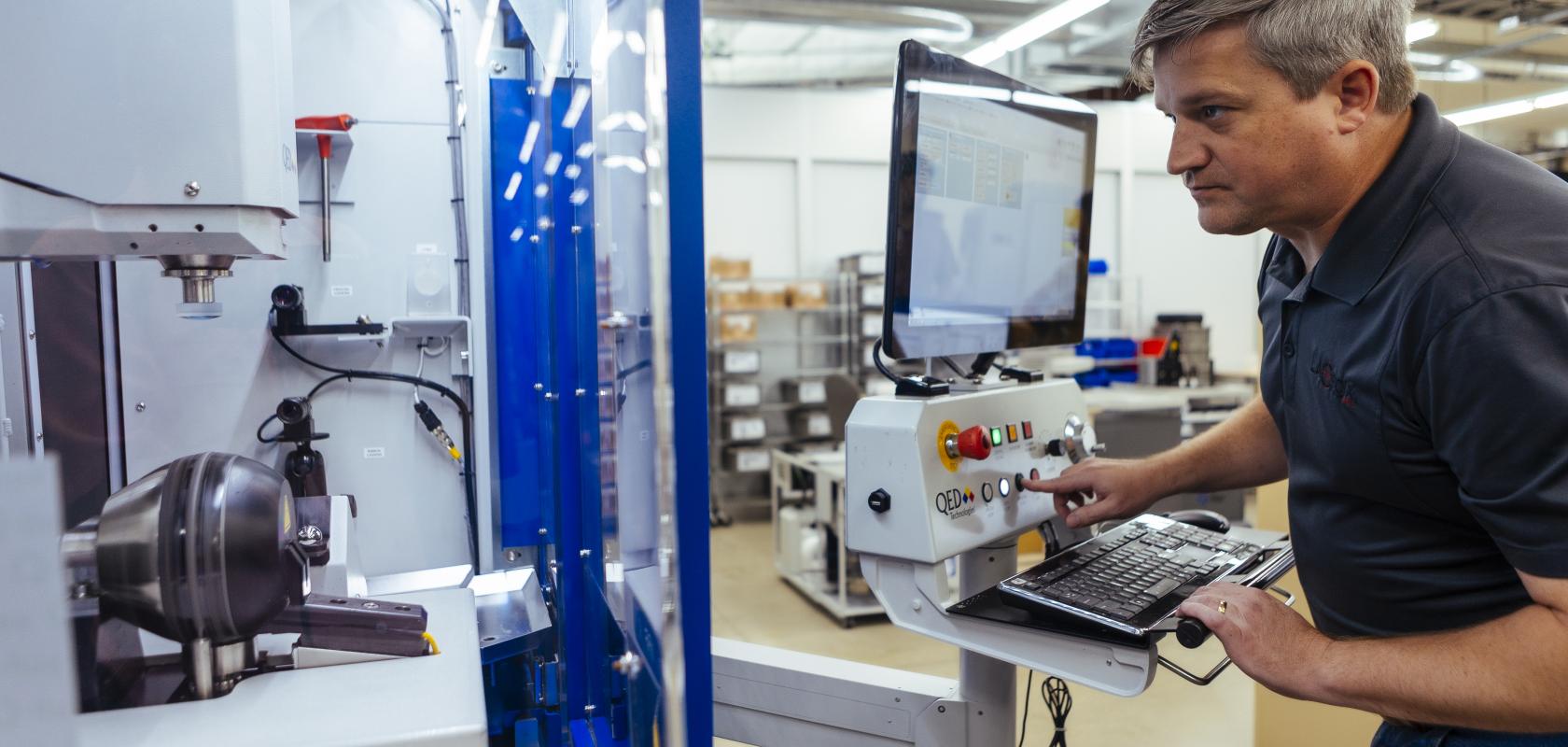
“Not all optics companies have their own in-house machine shop,” says Burchfield. “For LaCroix, having this capability reduces risk to our customers and streamlines scaling to production.” This matters especially for volume production. While low-volume work typically uses CNC machining (loading parts individually into computer-controlled equipment), volume production requires multi-blockers that process multiple parts simultaneously. With in-house tooling, LaCroix can build and modify tools quickly as projects scale, eliminating bottlenecks. This capability internally saves customers both money and critical lead time, facilitating the smooth transition from prototype to volume that defines LaCroix's value proposition.
The assembly capabilities represent another response to long-standing customer requests. "Customers have been asking us for several years now to consider adding assemblies to our core competencies,” explains Burchfield.
The message is clear: LaCroix positions itself as a customer-first, vertical partner that can handle complete optical solutions. "What we're really doing is mitigating our customers' supply chain risk," Burchfield emphasises.
Investing in metrology alongside manufacturing
LaCroix recognises that manufacturing capability means nothing without the metrology to prove it. "As important as it is to invest in optical machines, it's just as important to invest in metrology devices," Burchfield notes. Meeting customer specifications requires not just the ability to manufacture to tight tolerances but the equipment to verify those tolerances consistently.
This commitment to quality underpins LaCroix's reputation as a dependable partner. "We pride ourselves in being able to collaborate with our customers," Burchfield explains. "We don't like to be mentioned as another lens supplier. We're more than that. Our customers place orders, and we're a dependable partner that can meet their delivery and quality requirements regardless of order quantity."
That final phrase: "regardless of order quantity," encapsulates LaCroix's unique position. Whether a customer needs ten prototype units or ten thousand production parts, the same facility, the same team, and the same quality standards apply.
LaCroix's customer base spans defence, medical devices, space systems, machine vision, and scientific R&D. As a US manufacturer with ITAR registration, defence work represents a significant portion of business, everything from fire control systems and laser designators to imaging systems for various military applications.
Medical device optics encompass imaging systems for eye examinations and hospital diagnostic equipment. "It's optics that give the machines vision," Burchfield notes. The scientific R&D sector includes DNA sequencing, genome mapping, and diagnostic equipment.
LaCroix doesn't design optical systems, but the company excels at manufacturing feasibility consultation. When customers provide drawings, LaCroix's team reviews them for manufacturability, particularly for projects destined for volume production.
"We've had success working with our customers and being able to offer design for manufacturability suggestions that help when transitioning from prototype to production," Burchfield explains. "The earlier we’re involved, the more we can do. A conversation at the design stage – about tolerances, clear aperture, coating bandwidth – is often what makes the difference between a prototype that works and a product that scales.”
Not every customer can accommodate such changes, and LaCroix will manufacture to specification regardless. But early flexibility on tolerances tends to show up where it counts – in production efficiency and cost.
The company has worked with customers at every stage: from initial concept through all prototype iterations to volume. "That’s where our capabilities shine,’ Burchfield explains. “Transitioning from prototyping to a production schedule is a significant shift– and we’re structured to walk alongside our customers' programs through every step of it”. They’ve also joined projects already in volume after prototyping elsewhere.
Early engagement allows LaCroix to optimise designs for volume production from the start. "We try to put our best foot forward for them and us," Burchfield says. "We prefer to support the program from inception – that’s where we can put our full capabilities to work for the customer.”
LaCroix finds itself uniquely positioned as perhaps the last company in North America capable of volume precision optics manufacturing without outsourcing. "There's been a larger push to keep things in the States," Burchfield notes. Post-pandemic supply chain disruptions highlighted the risks of overseas dependency. When lead times extend and logistics become unpredictable, having a domestic supplier with prototype-to-volume capability becomes invaluable.
LaCroix serves customers of all sizes, from small startups to publicly traded corporations, and supplies to companies globally.
Investing in people and capability
The company's growth trajectory necessitates constant hiring. "We're probably hiring anywhere from five to ten production employees a month," Burchfield says. In an area where the nearest optical company sits eight hours away, LaCroix can't recruit trained opticians. Instead, the company invests in training.
LaCroix has partnered with Monroe Community College in Rochester, New York, participating in their optical technician apprenticeship programme. "We're very people-first," Burchfield explains. "In addition to investing in the company in terms of machines, the company is committed to investing in people."
This training investment creates a development pipeline for specialised skills. "There's a long lead time to turn them into opticians, but then you're investing in them, and that breeds loyalty," Burchfield notes. The company's average tenure currently stands at twelve years – remarkable in an era of frequent job changes.
In an age of automated systems and AI chatbots, LaCroix maintains something increasingly rare: when customers call, they speak with a person. "At the end of the day, when someone calls LaCroix, they talk to a person, not an answering machine," Burchfield says. "It's all about the people."
This philosophy extends to customer relationships. The company maintains a robust web presence and attends industry trade shows, but the best customer relationships often develop organically.
LaCroix's current expansion responds to immediate customer demand for increased capacity, particularly as defence programs ramp from prototype to volume production. "A lot of our projects are really ramping up now," Burchfield notes. The company focuses on visible optics currently, though infrared capabilities remain a long-term ambition. "All the work we have right now, our focus is on increasing capacity. That's what our customers need from us today."
The facility that began with 12,500 square feet in 1976 has now undergone five expansions, and the family that started with surplus equipment in a rented Chicago space three-quarters of a century ago has built something enduring: a company that combines advanced manufacturing capability with personal service, technical expertise with genuine partnership.
"We can't be everything to our customers, but we try to be as much as we can within our competencies," Burchfield reflects. "We've always been good collaborators. We're the last company in North America that can make volume precision optics without outsourcing, and we're proud of what we do here."
In an industry where supply chains grow ever more complex and quality demands intensify, LaCroix Precision Optics offers something increasingly valuable: capability, consistency, and the kind of partnership that only comes from people who genuinely care about getting it right, all delivered from a single facility where every process, from initial prototype to volume production, happens under one roof.