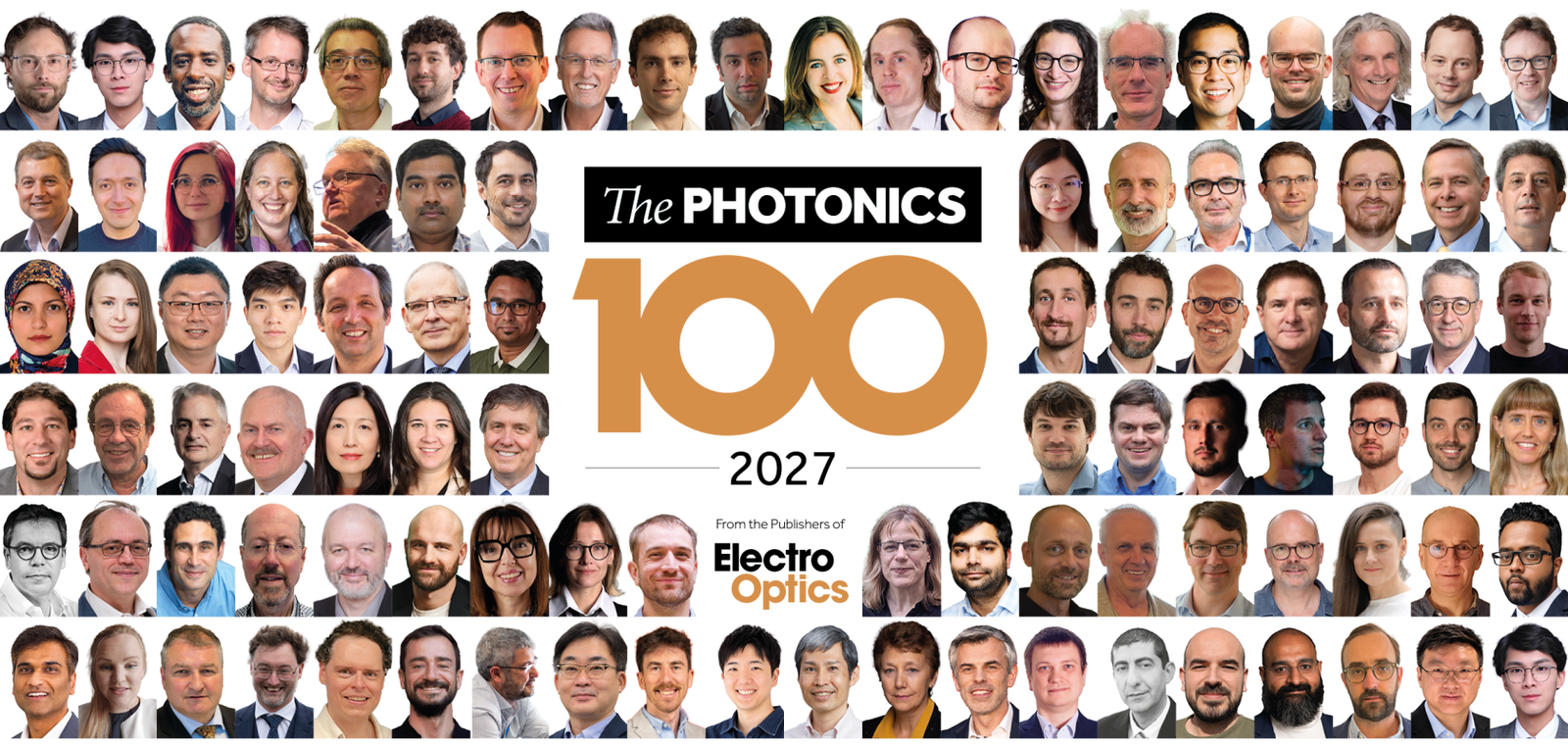
It is extremely exciting to reveal the latest cohort joining our ever-growing community of peer-nominated R&D leaders as the Photonics100 celebrates its landmark fifth anniversary. Reaching this milestone expands our global network to almost 500 alumni, following a record number of nominations that made this year’s selection our most competitive to judge yet.
Despite macroeconomic headwinds, the financial commitment of our community remains formidable: this year’s cohort alone expects to spend £56m on photonics R&D in the coming 12 months, up from the £40m estimated by last year’s list.
If we extrapolate from those spending forecasts, the expanded ‘Photonics500’ universe represents spending power of almost a quarter of a billion pounds ($320m). Perhaps more importantly, 69% of this year’s cohort forecasts growth in their R&D budgets in the next 12 months.
Crucially, our 2027 honourees reflect a fundamental shift: photonics is evolving from an enabling, auxiliary discipline into the primary physical layer supporting areas such as optical AI networks, telecom infrastructure, quantum systems and medical diagnostics. Looking across the next five years, our 2027 cohort anticipates the mainstream adoption of electro-photonic co-design from the outset, rather than adding optical components as a costly afterthought.
As many of our honourees highlight, this technological leap brings real operational friction. The rapid expansion of AI data centres is straining global optical component supply. At the same time, the industry faces an urgent transition from developing and demonstrating device physics in the lab to competing in a high-volume manufacturing race.
With photonic chip yields reportedly running well below those of electronics and downstream packaging, testing and assembly accounting for up to 80% of final device costs, our Photonics100 experts say that standardising automated assembly will be paramount for the industry to hit its 2030s targets.
Demographically, this year’s list presents a compelling picture. The UK and USA bolstered their leadership positions, alongside welcome growth from Spain and Canada, and first-time representation for Argentina. Looking across all five years of the programme, the USA, UK and Germany between them account for more than half of the honourees, a testament to the strength of photonics R&D in those countries, but also a clear call to action for the other 29 nations represented.
Delivering this programme requires immense work behind the scenes. My sincere thanks go to Fin O’Reilly and Paul Hamblin for shouldering the heavy editorial lifting, Andrew Knight for masterminding nomination outreach, and COO Mark Elliott for overseeing the entire project.
We also extend warm thanks to Chroma Technology for their steadfast sponsorship, helping us to host invaluable networking meet-ups at major global events, such as Photonics West, Laser World of Photonics and this year’s ‘launch party’ in Düsseldorf. All of these in-person events serve to significantly strengthen our growing, dynamic community.
Congratulations to the Photonics100 class of 2027, and thank you to our previous alumni and everyone else who submitted nominations.
Warren Clark
CEO, Europa Science