Beyond Filter Selection: Building Cleaner Optical Channels in Next-Generation Life Science Instruments
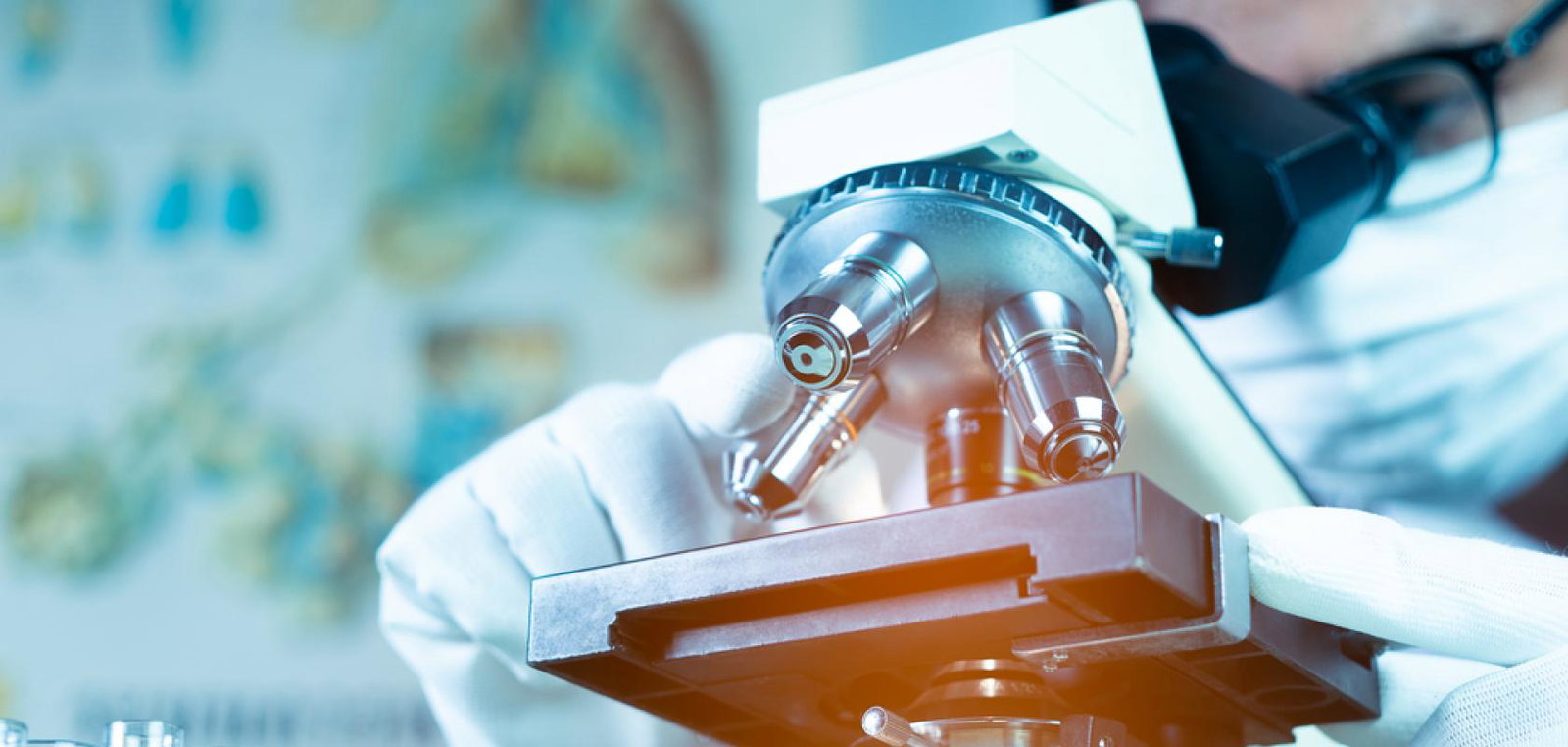
(Credit: Shutterstock/arrowsmith2)
November 25th 2026 - 3pm BST
In association with
■ Join industry experts to uncover why full optimisation of optical systems is key to developing evolved, next-generation scientific instrumentation.
As life science applications based on multiplexed imaging, flow cytometry and advanced microscopy become more technically demanding, instrument developers are under increased pressure to capture more information, distinguish more signals and deliver more reliable performance from complex optical architectures.
Modern instruments are asked to detect multiple fluorophores and separate closely spaced spectral signals, all while maintaining sensitivity across different detectors and imaging modes under new and varied light sources. Meanwhile, restrictions in speed, size, weight, manufacturing cost and development readiness keep moving the innovation goalposts.
■ To tackle the challenge, we'll bring together leading voices from across the optics and life science landscape - asking them how engineers can design cleaner, more efficient optical channels to serve these demanding requirements.
We'll examine the complete optical pathway - from filter-set design and thin-film coatings to spectral separation, light-source compatibility and detector performance - asking how performance outputs such as signal quality and sensitivity are decided by design.
We’ll also ask what happens when optical architectures need to support more than one detection technology. As sensing technologies and analytical methods increasingly overlap, the multimodal solutions present further hurdles for designers to overcome. Our panel will discuss practical approaches to balancing performance, complexity and flexibility, sharing their views on whether system-level optical design approaches could 'future-proof' life science instrumentation.
Whether you design complete instruments, specify the optical components required or develop specialised imaging/analytical systems, practical insights for total optimisation will be shared this October.
Should I attend?
This online panel discussion is designed for:
- Optical engineers
- Experts in biophotonics, flow cytometry, spatial biology and multiplexed and fluorescence imaging
- Advanced microscopy developers
- System architects
- Optical and imaging researchers
- Life science and analytics OEMs
- Component & subsystem manufacturers
- Academic life sciences researchers
- All life science professionals
What will I learn?
- System optimisation: Why focusing on individual components in isolation is no longer enough for complex life science instrumentation
- Cleaner optical channels: How coatings, filter sets and spectral separation work together to reduce unwanted signal and improve measurement quality
- Multiplex challenge solutions: Practical considerations for signal separation and detection system performance
- Multimodal instrumentation: What developers need to consider when combining multiple components and techniques in a single platform
- Performance balance: How to deliver high performance without increased complexity
- Future-proof design: The importance of flexibility in platforms for emerging life science applications
Speakers
| 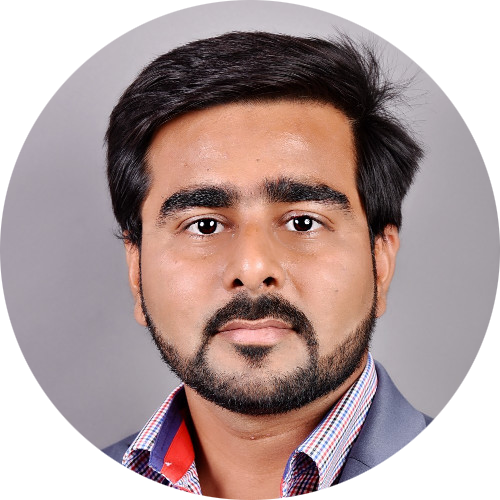 | |
He has overseen customer innovations at Chroma since 2021, guiding inroads into application areas including customisation, metrology and prototyping capabilities. Zain's work encompasses an array of industry areas, from analytical spectroscopy and microscopy, to aerospace & defence. Prior to Chroma, Zain undertook a Bachelors thesis project that explored the development of flexible super capacitor electrodes, analysing the fabrication and testing of devices from theory and practical standpoints. Studied Physics at Comsats University Lahore campus, Pakistan with a Bachelor degree in the field of Physics. He holds a Master's degree in photonics from the Abbe School of Photonics, Friedrich Schiller University, Jena, Germany. During his master degree he completed his internship at Vrije Universiteit Amsterdam (VU), Netherlands. He joined Chroma Technology as full-time employee in 2021 as junior account manager and became Account manager in 2022. | ||
|  | |
More speakers to be announced.
Having trouble registering? For any technical queries, get in touch at webcast@europascience.com.