For a company working at the sharper end of photonics manufacturing, ficonTEC has an unusually blunt but compelling definition of what creates a centre of excellence. “It is not defined by the equipment you own, but by the knowledge and people capable of solving problems that others cannot,” says Stefano Concezzi, PhD, CMO and Corporate Vice President at ficonTEC.
That upfront distinction goes to the heart of the company’s proposition as an employer. Its most distinct competitive advantage is almost certainly the collective knowledge, intellectual property and practical experience of the people designing, developing, operating and continually improving those components and (hybrid) photonic devices across ficonTEC’s 25 years – that quarter-century will have certainly thrown up a lot of challenging engineering problems. For ficonTEC, that knowledge is also inherently multidisciplinary: silicon photonics manufacturing brings together physics, precision mechanics, software, automation, electronics and materials science. No individual can master every aspect of that, so success depends on specialists understanding their own disciplines and working together to solve problems that cross conventional engineering boundaries.
ficonTEC’s centre of excellence is therefore its people, not just its product: a collective capability built through collaboration, accumulated intellectual property and a quarter of a century’s worth of practical experience. That experience is significant in an industry that remains relatively young. For Moritz Seyfried, Director R&D, ficonTEC’s backstory means the company has already encountered many of the technical challenges that newer photonics businesses are only beginning to face. Its teams have had time to learn what works, understand what fails and, crucially, develop the process knowledge needed to move from promising technology to repeatable manufacturing.

Stefano Concezzi, PhD, CMO and Corporate Vice President at ficonTEC
Since its foundation in 2001, ficonTEC has built expertise across photonic assembly and testing, working closely with what Concezzi describes as “Lead Users” and some of the world’s most innovative companies. The result is an organisation capable of supporting customers from process development through to scalable production – and we know that matters because the photonics industry is entering a different phase of its development. AI infrastructure, silicon photonics, linear pluggable optics (LPO), co-packaged optics (CPO), near-packaged optics (NPO) and optical compute are pushing photonics towards production volumes that would have been difficult to imagine when many of today’s manufacturing processes were first developed. “The challenge is no longer simply, ‘Can we make this device?’” says Concezzi. “It is, ‘Can we make one million of them with predictable yield, cycle time, quality and cost?’”
ficonTEC is responding to that challenge by moving from what Concezzi calls “project to product” and ultimately towards providing manufacturing capacity. Customers increasingly need complete automated production lines rather than individual pieces of equipment. For Seyfried, that shift is changing the nature of the engineering challenge. After more than 14 years with ficonTEC, he says the current transformation of the photonics industry is different from anything he has experienced before.
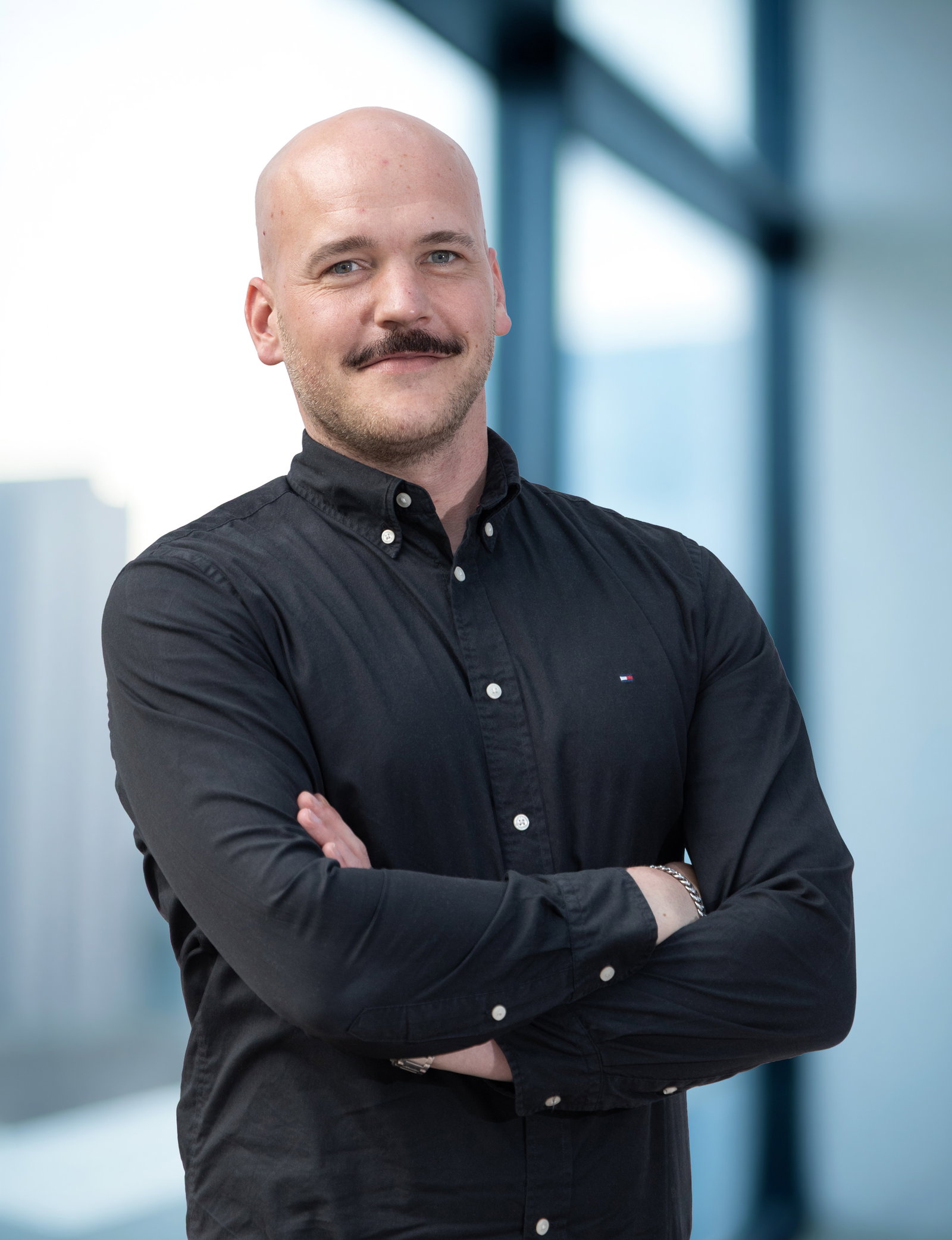
Paul Mankow, Head of HR at ficonTEC
That is an attractive proposition for engineers who do not want to spend their careers solving incremental problems. “The challenging ones are also the most fun ones,” Seyfried says. One of his examples illustrates the point: an optical alignment process involving indium phosphide required positioning to be maintained within a few tens of nanometres for a few minutes while measurements were completed. The solution involved data scientists developing a thermal model of the machine and using machine learning to adjust positioning in the nanometre range based on temperature sensors. The work was not simply a successful engineering project; it became a significant part of the team’s PhD thesis! For technically ambitious people, that test case should resonate. ficonTEC offers access to problems where the boundaries of photonics manufacturing are still being established, with the opportunity to see research translated into practical production capability.
Remaining curious
We know the complexity of modern photonics manufacturing also changes the definition of a photonics specialist. Deep technical expertise remains essential, but ficonTEC is perhaps as focused on also finding people who can understand what lies outside their immediate discipline. “We need people comfortable saying, ‘I don’t know yet, but I want to understand it,’” says Concezzi. Seyfried describes the people the company needs as systems thinkers: specialists who understand their own disciplines deeply while remaining curious about the technologies surrounding them. “No discipline wins alone now,” he says. “Successful photonics manufacturing requires optics, mechanics, electronics, software, automation and testing to work as one system.”
For Paul Mankow, Head of HR, that philosophy has direct implications for recruitment and career development. ficonTEC must expand at a pace that matches its markets, which – like the company – are growing fast, and that is creating demand for specialist knowledge in areas such as wafer-level testing and semiconductor manufacturing, as well as new opportunities across R&D, automation, service and customer-facing roles.
Growth is creating opportunities beyond conventional photonics R&D, while the company is investing in the training and career structures needed to help employees take advantage of them. The global skills shortage makes that approach necessary. Experienced photonics and semiconductor specialists can be difficult to recruit, while adjacent industries such as automotive can offer a larger pool of engineers with transferable skills.

Moritz Seyfried, Director R&D at ficonTEC
But technical qualifications alone do not determine whether someone will thrive; Stefano argues that formal education will not necessarily establish whether a candidate can collaborate effectively, communicate positively, work under pressure or approach difficult problems constructively. As we have said, curiosity and initiative matter a lot because engineers cannot be expected to know every answer in a rapidly changing technical environment.
That means people being prepared to learn independently, and using whatever resources are available, from technical papers and online documentation to videos and AI tools. The important differentiator here is between someone who expects to be given every answer and someone who takes responsibility for finding one. “Today’s expert must still be tomorrow’s student,” says Concezzi.
Seyfried draws a similar distinction between technical background and mindset: experience is relevant, but ficonTEC wants people who bring energy, are motivated to achieve results and are comfortable with work that does not always follow a predictable routine. For candidates, that is an important qualification. ficonTEC is not necessarily the most obvious environment for someone who wants a narrowly defined role with few surprises – technical or otherwise. It is, instead, looking for people who want to contribute, learn and take on problems that may not have a straightforward solution. Rightly, the company is also putting more structure around how those people develop. Mankow says ficonTEC has invested substantially in onboarding, training and career planning. For example, he and Seyfried are working on a more structured R&D framework that assesses employees’ technical knowledge and soft skills, then identifies their next development step. This is particularly relevant to younger candidates, who increasingly want to understand their career options, the impact of their work and what they might be doing several years into the future. ficonTEC's answer is to provide a clearer development process without pretending that every career can be mapped out in advance.
The company’s international footprint creates another dimension to that development. Employees have moved between countries (ficonTEC has familiar centres in Germany, Estonia, China, Taiwan, Thailand, Malaysia and the United States, but the company’s operations spread much wider) and such moves demonstrate that career progression here need not mean leaving the organisation to find a different role or, particularly, a new technical challenge.
For Seyfried, the possibilities reflect the company’s dynamism. “You have to take advantage of being in a highly dynamic environment with a growing company,” he says. “As soon as you have an individual who really wants to achieve something and is pushing forward with good work, there are a huge number of career paths available.” That dynamism, however, comes with a caveat. Concezzi suggests that looking five years ahead in photonics can be difficult because both the technology and the markets may have changed substantially. For that reason, the company places particular emphasis on a more realistic three-year horizon.
Autonomy, belonging and competence
Perhaps the most striking aspect of ficonTEC’s employer proposition is its refusal to claim that it has everything figured out. “We will never be a stable company in the traditional sense,” says Concezzi. “And that’s a positive.” It is an unusually candid admission, but it reflects the challenge facing a business transforming from an SME into a global organisation, while trying to preserve the entrepreneurial engineering culture that made it successful in the first place. Concezzi compares the process to transforming a small plane into a much larger aircraft while it is still flying.
That inevitably creates pressure. The company must introduce the processes needed to support international growth without losing the autonomy and collaborative problem-solving that distinguish its working environment. He summarises how that feeds into the employee philosophy through three words: autonomy, belonging and competence – his ABC, if you like. Autonomy means giving people responsibility and the freedom to act without micromanagement. Belonging means identifying with the organisation, taking pride in its work and contributing to the wider community. Competence means providing coaching, training and opportunities to keep developing professionally.
The three are interconnected. Autonomy without the right skills can leave people unsupported, while training without responsibility can become an exercise in ticking boxes. Neither is likely to sustain motivation if employees feel disconnected from the organisation and its objectives. ficonTEC's approach is to combine individual responsibility with opportunities to learn and contribute. Its wider community activities, including quarterly initiatives such as food packing and charity projects, also provide ways for staff to participate beyond their immediate technical responsibilities, but the strongest source of belonging is likely coming from the work itself. Mankow says its engineers are motivated by exposure to different projects, customers and technical challenges. “It simply doesn’t get boring,” he says.
That variety is partly a consequence of ficonTEC’s focus on multiple photonics markets, from communications and AI infrastructure to sensing, lasers, medical, aerospace and quantum technologies. For Seyfried, that breadth is strategically important because industry cycles are unpredictable – AI may dominate demand today, but other applications could become equally important in the future. For employees, the same diversity of strategy creates opportunities to move between technologies and markets.
ficonTEC may be a B2B machine builder rather than a widely known consumer-facing technology brand, but its machines and processes sit behind the production of technologies being developed by some of the world's leading companies, but those opportunities also need to be understood in the context of an intensely competitive global market. Here, the ABC philosophy becomes more than just a cultural reference point. Autonomy allows people to take responsibility for solving problems; belonging connects their efforts to a shared objective; and competence gives them the confidence and capability to tackle increasingly demanding work.
The result is certainly a workforce motivated by the value of what it does. For ficonTEC, that is particularly important as it seeks to expand its role in the global photonics supply chain. Its ambition is to become an organisation capable of helping customers translate photonics innovation into reliable, high-volume production. That requires investment in technology, but it also requires people who can adapt as the business and its markets evolve. The challenge is to maintain the collaborative culture that enables complex problems to be solved, while introducing the structures and processes needed to operate at a much larger scale.
“Capital and technology alone will not make it happen,” says Concezzi. “People will.”
For prospective employees, ficonTEC is offering neither a perfectly predictable corporate career, nor a promise that every challenge has already been solved. Instead, it offers access to difficult engineering problems, exposure to major customers, opportunities to learn across disciplines and the possibility of building an international career as the company grows. That proposition may not suit everyone – but for specialists who want to influence the development of photonics manufacturing, rather than simply occupy a defined position within it, the uncertainty may be part of the appeal.
“Join the ride,” says Concezzi. At ficonTEC, the ride is not just about building machines. It is about developing the collective expertise, curiosity and collaborative capability needed to automate the next generation of photonics manufacturing – and giving the people who make that possible room to grow alongside it.