Microscopic solar cells could power 3D-printed biological tissue, says study
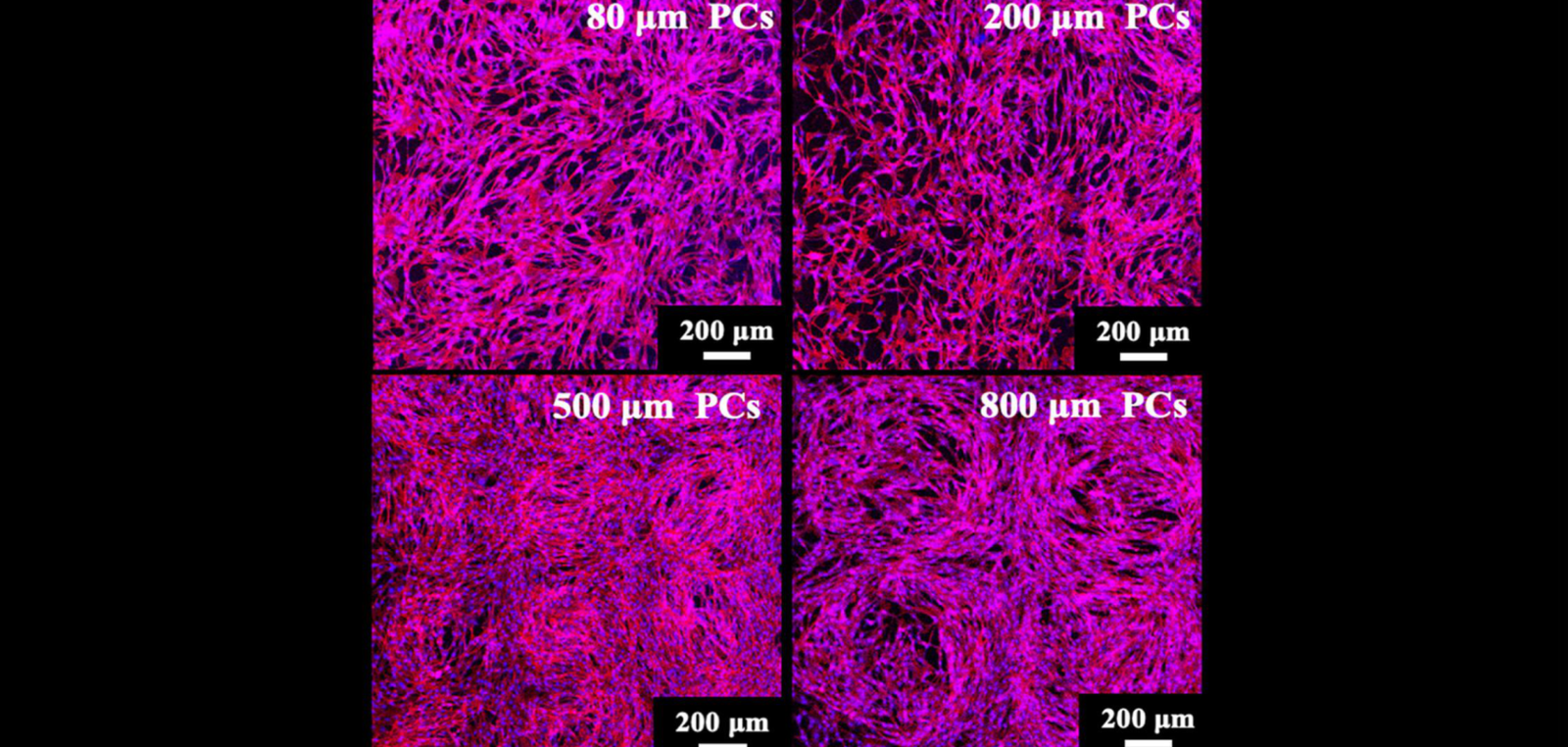
By changing the diameter and layout of solar cells placed on a computer chip, the research team from Penn State changed the alignment of cells by harnessing light. Each image visualises the impact of solar cells on cell alignment, with the bottom right showing the solar cells with the largest diameters. The diameters of each cell span from 80µm (top left) to less than 1mm (bottom right) (Image: Ibrahim Ozbolat / Yifan Tao)
A study from Penn State has found small-scale photovoltaic arrays could help wirelessly engineer living tissue

Register for FREE to keep reading
Join 15,000+ photonics professionals staying ahead with:
- Exclusive insights, funding alerts & market trends
- Curated newsletters and digital editions
- Access to The Photonics100 list of R&D champions
- Exclusive panels & roundtables for professional development
- Technical White Papers & product updates to guide smarter decisions
Sign up now
Already a member? Log in here
Your data is protected under our privacy policy.