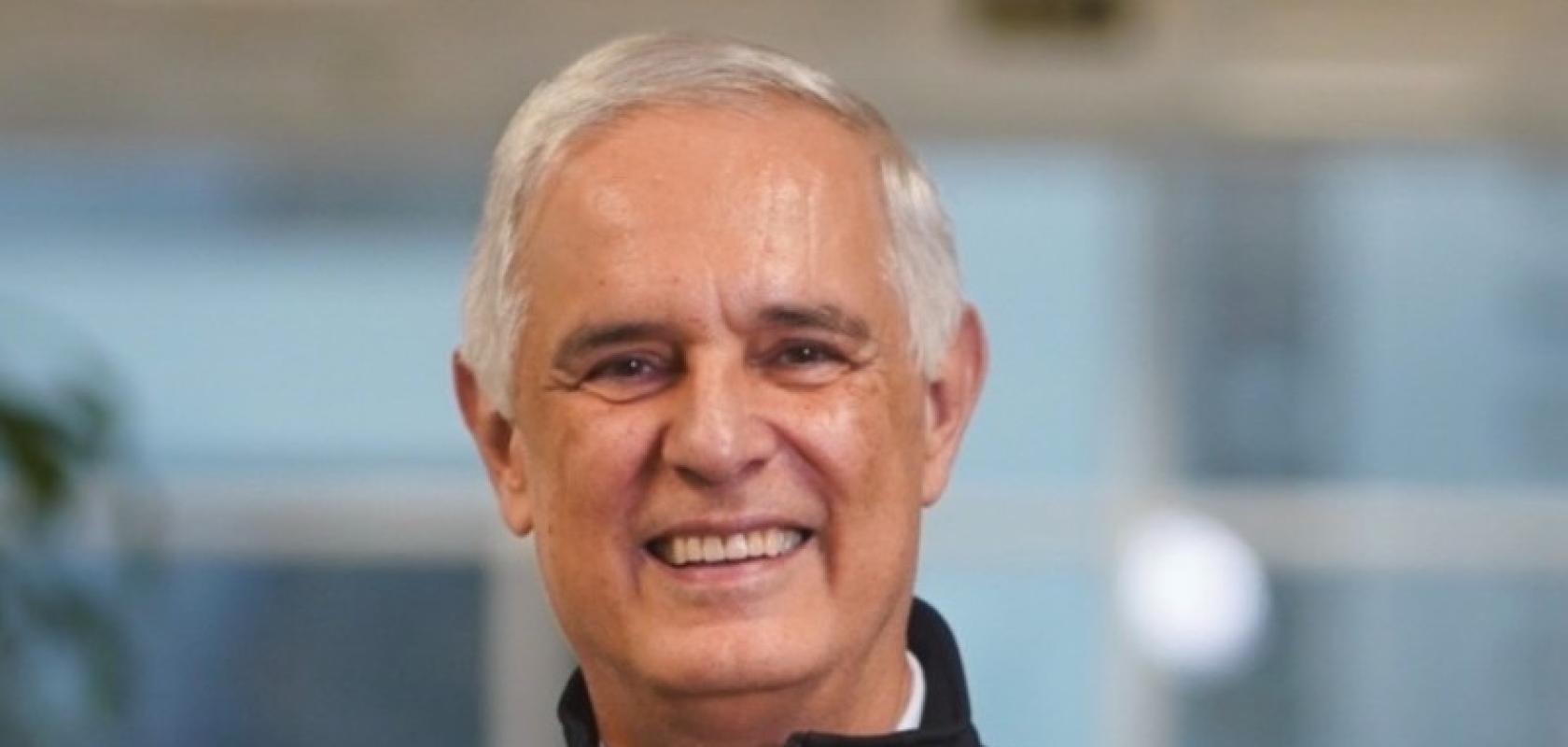
In this interview, Antonio Castelo, EPIC’s Technology Manager for Bio-Medical and Lasers, talks to Foad Shaikhzadeh, Chairman & CEO at Lightera, a global provider of optical-fiber and connectivity solutions. Also in attendance were Steve Allen, Marketing Director of Specialty Solutions, and Sherry Salyer, PR contact.
Could you give readers a brief overview of Lightera?
Foad Shaikhzadeh: Lightera was formed in 2025 by the merger of three operations that Furukawa Electric Co, Japan, had in the field of optical solutions, namely: the Fibre Cable Division of Furukawa Electric in Japan, covering the Asia/Pacific Region; OFS in the USA, covering North America, Europe, the Middle East and Africa; and Furukawa Electric LatAm, based in Brazil and covering Latin America.
Although each region had its strengths, Furukawa decided that they would be better able to address emerging growth markets such as AI, data centres, 5G/6G and sensing by merging into a single entity (which now has its operational headquarters in Norcross, USA).
This has enabled greater synergy among regions, quicker decision-making, and faster innovation in high-performance optical fibre and connectivity solutions. Additionally, we now have a unified and comprehensive product portfolio covering copper networks, equipment, infrastructure and a range of standard and specialty fibre optics and connectors for optical networks.
What’s the background to your appointment as its Chairman & CEO?
FS: In 1979, after completing a degree in electronic engineering from the University of São Paulo, I joined Furukawa Industrial, a Brazilian subsidiary of Furukawa Electric, as a product engineer. The subsidiary was set up to manufacture and supply copper cables and electrical wiring for the Brazilian and Latin American markets. In 1986, I became Technical Manager and then Plant Manager in 1989.
In the 1990s, the company expanded into optical fibre, and in 1996, I became Director of Engineering Systems overseeing the production of optical fibre, telecom and data network cabling. We quickly became one of Latin America’s leading fibre-optic cable producers.
In 2001, I was appointed President & CEO of Furukawa Electric LatAm, responsible for our factories and distribution in Brazil, Argentina and Colombia, and in 2009, I became a board member of OFS, Furukawa’s optical fibre operation in the US and EMEA.
In 2014, I was appointed Senior Vice-President of Furukawa Electric, Japan. A decade later, in 2024, we began strategic discussions to unify the regional operations into a single global entity and in 2025, Lightera was launched with me serving as Chairman & CEO.
How did you come up with the name Lightera?
Sherry Salyer: When we began the rebranding journey, we invited our global teams to participate in an internal naming contest. We wanted a name that could live anywhere in the world and speak to both our legacy and our aspirations. Lightera stood out – a combination of “light” and “era” that embodies our fibre-optic roots and our vision to enable a new era of seamless, universal connectivity.
What challenges did you face in changing your brand name?
SS: When we introduced the brand, the market was already experiencing notable changes – Nokia’s acquisition of Infinera being a prime example – so customers were familiar with the idea of legacy brands transitioning into new identities.
We also have a very strong parent company brand in Furukawa Electric, along with powerful product brands such as the FITEL Fusion Splicer.
From a marketing perspective, one of our biggest challenges has been demonstrating the strength of that parent relationship, the value of our solution and product brands, and the evolution from OFS to Lightera.
Effectively showing how all those brands fit together as a family has been a key focus of the transition.
Steve Allen: I think companies tend to think there’s more brand equity than the market does. In our case, the market seemed to adopt the Lightera brand very quickly. However, one of the challenges we faced was to make sure that some of the ‘made in America’ industries we work with knew we were American, but also global.
What challenges did the new management structure present?
FS: Coordinating the work of 4,500 employees spread over 19 countries and 11 time zones, while navigating the cultural differences of each region, has, inevitably, presented challenges.
Time differences make it difficult to bring everyone together for meetings so we can align on targets and objectives, not to mention language issues as our employees communicate in 34 languages.
We also face regional differences in labour regulations and attitudes to work. In Japan, for example, there are many different labour regulations, and most Japanese employees view work contracts as a job for life.
This mindset exists to a lesser degree in Europe, but not at all in the United States or Latin America. As a result, responding to labour market demands in different regions can be complex.
Before the merger, the regions operated competitively. While competition can drive innovation, it can strain relationships and weaken the spirit of cooperation. For example, moving a product from one site to another can be challenging, as engineers tend to love and be protective of what they develop.
Having said that, right now, we are seeing an exceptional level of cooperation – particularly in our major project to expand production capacity, where the teams in Japan and the US are collaborating more effectively than at any time I have seen in the past 15 years.
Of course, we continue to navigate different cultures and approaches, but it’s my belief that this makes the company stronger because we have different perspectives contributing overall.
How do you see the future of fibre sensing markets?
FS: Very positively. Lightera is aligned with Furukawa’s “Vision 2030,” which aims to build next-generation global infrastructure by combining information, energy and mobility. Sensing via distributed IoT, photonics and advanced comms is seen as a key driver of this infrastructure. As Japan has one of the fastest-aging populations in the world, Vision 2030 strongly includes medical sensing, especially via optical fibre with the aims of building minimally invasive diagnostic and therapeutic solutions and improving implant safety.
What’s your advice on finding new markets?
FS: We often hear about the importance of listening to customers. But what I think is most important is to listen to their pain – the customer’s underlying difficulties and anxieties that shape their needs.
To do this effectively, you have to build trust and confidence, co-develop and give the customer different options to meet their needs. In Europe, for example, you have very small ducting for installing micro cable, and conventional American products are too large to install.
As a solution, our team in Japan came up with a low-friction design of optical drop cables that could be installed in Europe, where very small ducts are used for installing micro cables.
Traditional American products were simply too large for these environments. This kind of innovation – rooted in understanding customer pain – opens doors to new markets.
SA: I have a team that consists of a market manager for each market we serve – medical, aerospace, sensing, specialty communications and so on. We are entirely customer-focused and many times it results in specific development for specific customers.
One example is in medical, where we have successfully developed an innovative sensing solution. We make the glass, draw the fibre, apply the assembly and fibre Bragg gratings to produce a very technical sensing device that goes inside the body.
How do you see the future?
FS: Lightera has a bright future. We have several unique products, like our subsea ocean fibre and fusion splicing tools. But the fibre-optic sector is very competitive. To maintain leadership, we must accelerate innovation.
To this end, we are going to separate our R&D and research and innovation activities, while leveraging our integrated global structure to achieve greater cooperation and faster development of new types of fibres and connectivity solutions.
At the same time, we will continue to focus on high-growth markets such as generative AI/data centres, 5G/6G, utilities, aerospace, defence, sensing and medical applications.
Over the next decade, our aspiration is clear: we expect to become a world-leading optical fibre and connectivity company.