
The latest optical products for astronomy in 2026
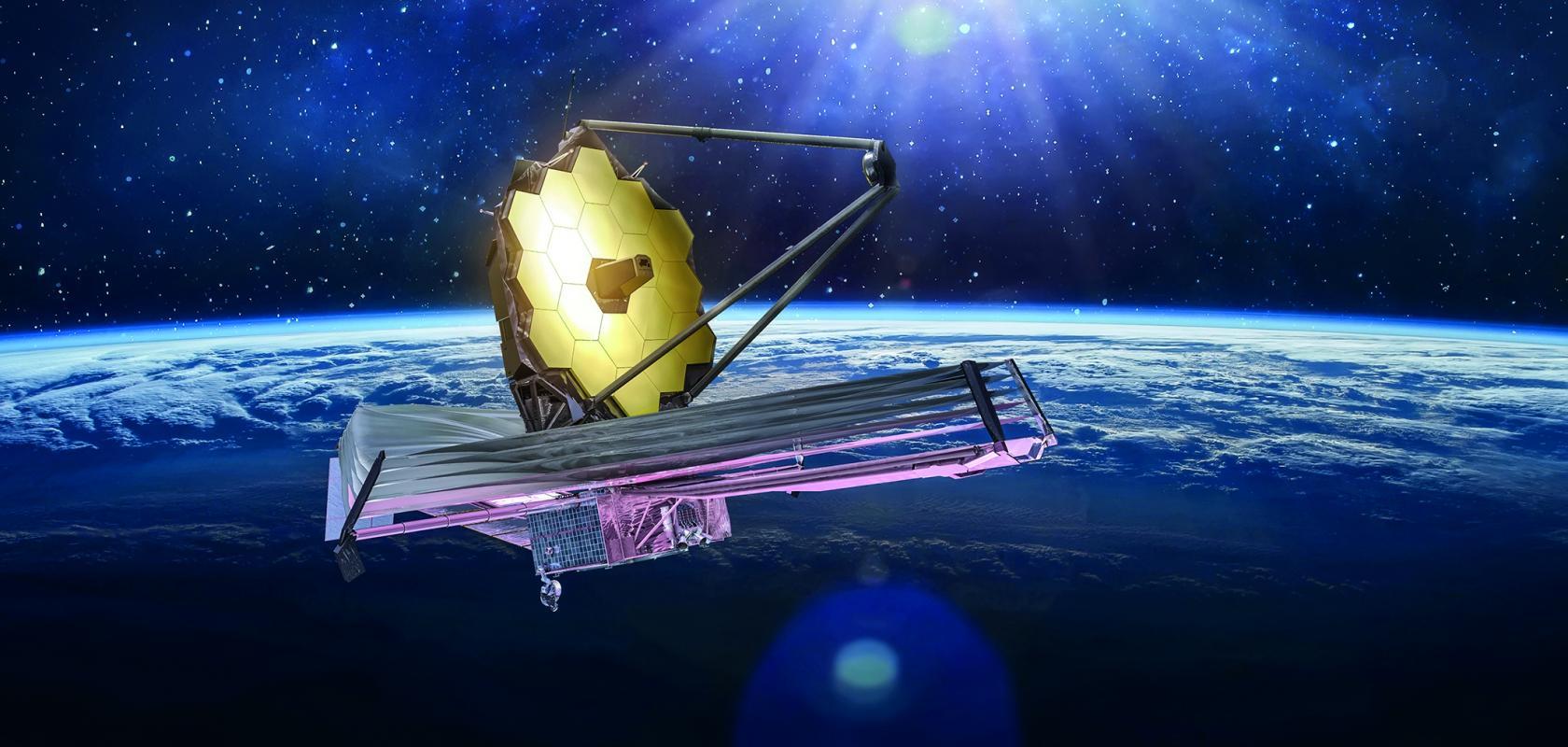
Optics play such a crucial role in astronomy because they allow astronomers to collect and analyse light from distant objects in the universe (Credit: Dima Zel/Shutterstock.com)
Optics are fundamental to the design, construction, and operation of telescopes and specialised instruments used to study stars, planets, galaxies, and the deep structure of the universe. In the period following June 2025, the field has transitioned from simply gathering light to actively processing it. The integration of real-time AI into optical pipelines in late 2025 has allowed telescopes to autonomously classify transient cosmic events, such as the 2025 discovery of Comet 3I/ATLAS (the third ever interstellar visitor), with unprecedented speed.
The primary reason optics remain the backbone of astronomy is their ability to collect and analyse light from objects across vast distances. Modern optical telescopes allow astronomers to study phenomena that are far too faint for the human eye. Recent milestones, such as the Einstein Probe’s (EP) 2025 deployment of "lobster-eye" micro-pore optics, have allowed us to capture rare intermediate-mass black holes by observing them in wide-field X-ray wavelengths. This is a feat that traditional optics could not achieve.
What optical instruments are used in astronomy?
In addition to traditional telescopes, modern space-qualified optical instruments include:
When detail and clarity truly matter, Knight Optical’s range of components for astronomy deliver.
Humans have been looking to the stars for millennia, and with Knight Optical’s range of precision custom optics for the astronomy industry, they’ve never been clearer.
From concave mirrors used in telescopes designed to look deeper into the universe, to coatings and reticles essential for manufacturing and testing, Knight Optical’s specialist components help astronomers to solve the mysteries of the cosmos.
SPONSORED BY

Spectrographs: These break down light into component wavelengths. In 2025, the Dark Energy Spectroscopic Instrument (DESI) provided evidence suggesting that dark energy might be weakening, a discovery that has reshaped cosmological models.
Photometers: These measure the precise brightness of celestial objects.
Coronagraphs: New vector Apodising Phase Plate (vAPP) coronagraphs are now being commissioned to cancel out starlight more effectively, allowing for the direct imaging of exoplanets closer to their host stars than ever before.
What are the main optical components used in astronomy?
Optical instruments rely on a sophisticated architecture of components to manipulate light. The primary component is either an objective lens or a primary mirror, which focuses light towards a secondary mirror or the focal plane.
To achieve the precision required in 2026, several specialised components are used:
Adaptive optics (AO): The AO market has surged in 2026, using high-speed deformable mirrors and sodium laser guide stars to cancel out atmospheric turbulence in real time.
Photonic lanterns: A 2025 telescope technique using photonic lanterns has enabled single telescopes to achieve the high-resolution imaging previously only possible with large arrays.
Optical filters: Used to selectively transmit specific wavelengths. New ultra-narrowband H-alpha filters and light-pollution filters, optimised for 2026 LED street lighting, allow for high-contrast imaging even in urban environments.
Corrector plates: These neutralise spherical aberrations, ensuring the image remains sharp across the entire field of view.
Optical products for astronomy on the market now
Vendors of optical components and equipment for astronomy include Alluxa remains a leader in high-performance thin-film coatings. Most recently, the company developed two Hydrogen Alpha (H-alpha) emission line filters specifically for astronomy and introduced new analytical frameworks for predicting Transmitted Wavefront Error (TWE) in 2025.
Astro Hutech continues to provide equipment under the IDAS brand. Their 2026 focus is on smart astrophotography accessories, including filters specifically engineered to combat the spectrum of modern LED light pollution.
Astronomik is a primary manufacturer for the enthusiast market. Their 2026 range includes narrowband filters optimised for the latest generation of back-illuminated CMOS sensors.
Baader Planetarium produces a wide range of speciality filters. In 2026, they are a key provider for solar observation equipment, including the MK II Cool-Ceramic Herschel Prism for high-magnification study of the sun.
Bertin Technologies (Winlight) has emerged as a major European player in 2026, specialising in high-end optical systems and spectrographs for large-scale telescope projects and space-borne missions.
Edmund Optics has expanded its 2026 portfolio with Zerodur® Laser Line Mirrors, offering extreme thermal stability. They remain a primary supplier of achromatic and aspherical lenses for both research and commercial applications.
Exosens is a newly prominent name in the 2026 market. They provide high-end imaging sensors and wavefront sensing technology critical for the latest adaptive optics systems.
Imagine Optic solidified its position in late 2025 by integrating advanced wavefront analysis tools that allow for unprecedented correction of atmospheric distortion in high-end observatories.
Laser Components offers custom-made, space-qualified astronomical filters ranging from the UV to the far-infrared (FIR). They are a major supplier of coatings for the lasers used in laser guide star systems.
Materion provides bespoke filter designs for flagship space missions, including recent 2025 and 2026 lunar and Martian explorers.
Newport Corporation (MKS) focus in 2026 includes high-performance dielectric mirrors and vibration isolation systems, essential for the stability required by the next generation of extremely large telescopes.
Schott remains the global benchmark for mirror substrates. As of 2026, they have completed the delivery of the hexagonal segments for the Extremely Large Telescope (ELT) project. Their ZERODUR® glass-ceramic is essential for mirrors that must maintain their shape across extreme temperatures.
Spectrum Scientific (SSI) specialises in replicated optics and high-efficiency gratings. They are currently producing off-axis parabolic mirrors using low-expansion materials for the latest space-borne telescopes.
Thorlabs expanded its 2026 line of crystalline supermirrors, which feature extremely high reflectance. These are now essential for ultra-stable laser cavities and gravitational wave detection.
Toptica Photonics has become the industry standard for sodium laser guide stars, creating the artificial stars that allow ground-based telescopes to rival the clarity of space-based instruments.
Zeiss remains a premier manufacturer of high-end lenses. In 2026, they continue to supply the complex instrumentation optics for major global observatories while offering advanced lenses for professional astrophotography.
This is not an exhaustive list. If you provide optical components for astronomy and would like your company to be included, please let us know at: editor.electro@europascience.com