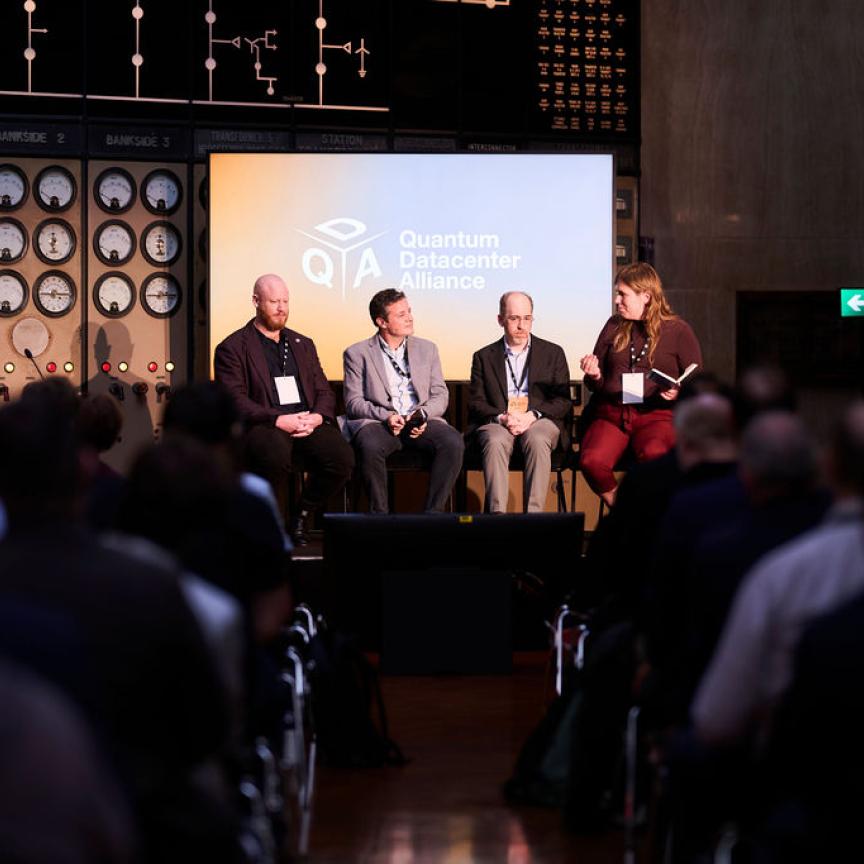
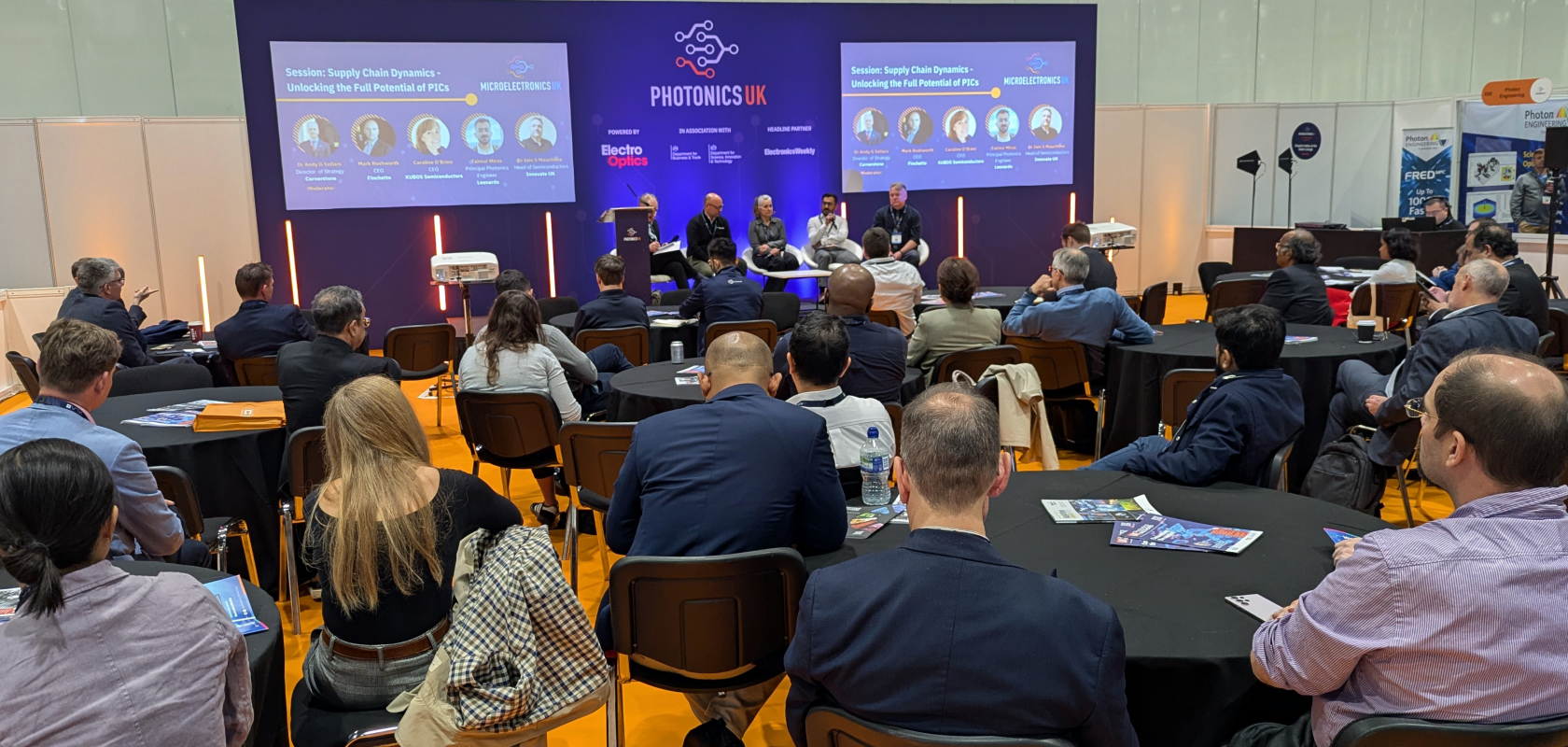
More than 100 speakers from across the semiconductor, photonics and embedded systems industries will converge on Austin's Palmer Events Center this Wednesday, 22 April, for the opening of Microelectronics US 2026, a two-day conference addressing some of the most pressing technical challenges in next-generation electronics design.
The free event, running April 22-23, spans three co-located stages – Semiconductors US, Embedded Systems US and Photonics US – and draws technical staff and engineering leaders from major names including Ford, General Motors, Honeywell, AMD, Arm, Sandia National Labs and Amazon Web Services (AWS).
Electro Optics is hosting the Photonics US stage and our COO, Mark Elliott, is over at the event, launching Day One with a speech, and introducing panels and speakers across the two days.
The event represents the US expansion of Microelectronics UK, which was held last September at London’s Excel, and is positioning itself as a comprehensive platform covering the full microelectronics value chain – from chip design and advanced manufacturing to packaging, photonics integration and embedded systems.
Sessions are organised around the practical constraints engineers face in real deployments: power and thermal management, safety certification, security, manufacturability and long-term reliability.
Photonics stage
The Photonics US stage opens with a deep dive into scalable silicon photonic quantum computing, followed by sessions on enabling quantum through semiconductor process and materials innovation, photonic crystal surface emitting lasers, and the macrotrend landscape shaping photonics investment. The afternoon session covers the real-world testing challenges that distinguish silicon photonics from conventional electronics, picoscale metasurface architectures for quantum photonics, a Photonics Start-up Showcase, and a panel discussion on building industry resilience for the next era of technologies.
Day two features a panel on scaling and miniaturising photonic integration, a session on photonics research from a non-profit government perspective, and content on transforming modern data centres with photonic technologies and signal and power integrity challenges in high-speed photonic interconnects. The Microelectronics US Impact Lab Award Ceremony also takes place on day two of the Photonics stage.
Semiconductors stage
Day one of the Semiconductors US stage opens with “From Policy to Practice: The CHIPS Act and U.S. Innovation Partnerships,” before moving into sessions on catalysing AI innovation, cross-industry perspectives on the evolving microelectronics landscape, and building resilient supply chains.
The afternoon turns to the long-term economic roadmap for the semiconductor industry, practical applications of IEEE debug standards for faster root-cause analysis, and scalable integrated semiconductors spanning materials, devices and emerging system architectures. A hands-on workshop – Getting Started on Your Edge AI Journey, the Easy Way – closes the day.
Day two broadens the lens, with sessions on securing the future microelectronics workforce, sparking interest in semiconductor careers before graduation, a Semicon Start-up Showcase, unlocking the potential of chiplets for semiconductor design, and AI-accelerated design enablement and collaboration. The afternoon covers edge AI on devices for frontline workers, advanced SoC verification methods, harsh environment electronics, and semiconductors for ADAS and autonomous vehicles.
Embedded systems stage
The Embedded Systems stage opens with a session on the expanding role of embedded systems in growing markets, followed by a fireside chat on the future of truly autonomous edge AI, a session on evolving digital twins from simulation to autonomous action, and dedicated content on designing intuitive HMIs for safety-critical environments and certifying embedded software and hardware for functional safety.
Day two moves into AI-driven quality control across software, models and hardware, efficiency and reliability in embedded testing and debugging, fitting large models into embedded silicon for edge deployments, and smart factories and embedded tech for autonomous manufacturing. Sessions on industrial IoT, real-time production sustainability, private 5G networks with IoT sensors and drone tech for first responders, and the future of RISC-V and open architectures round out the programme.
Registration is free for engineers, students and technology professionals at microelectronicsus.com.