In recent years, the transition of quantum technologies from research labs to industrial applications has been phenomenal. This trend is clearly reflected in public funding, venture capital investments, and patent applications for quantum applications. Broadly, quantum technologies refer to a collection of innovations that exploit quantum phenomena like entanglement, tunneling, and superposition to achieve tangible outcomes beyond limits set by classical systems.
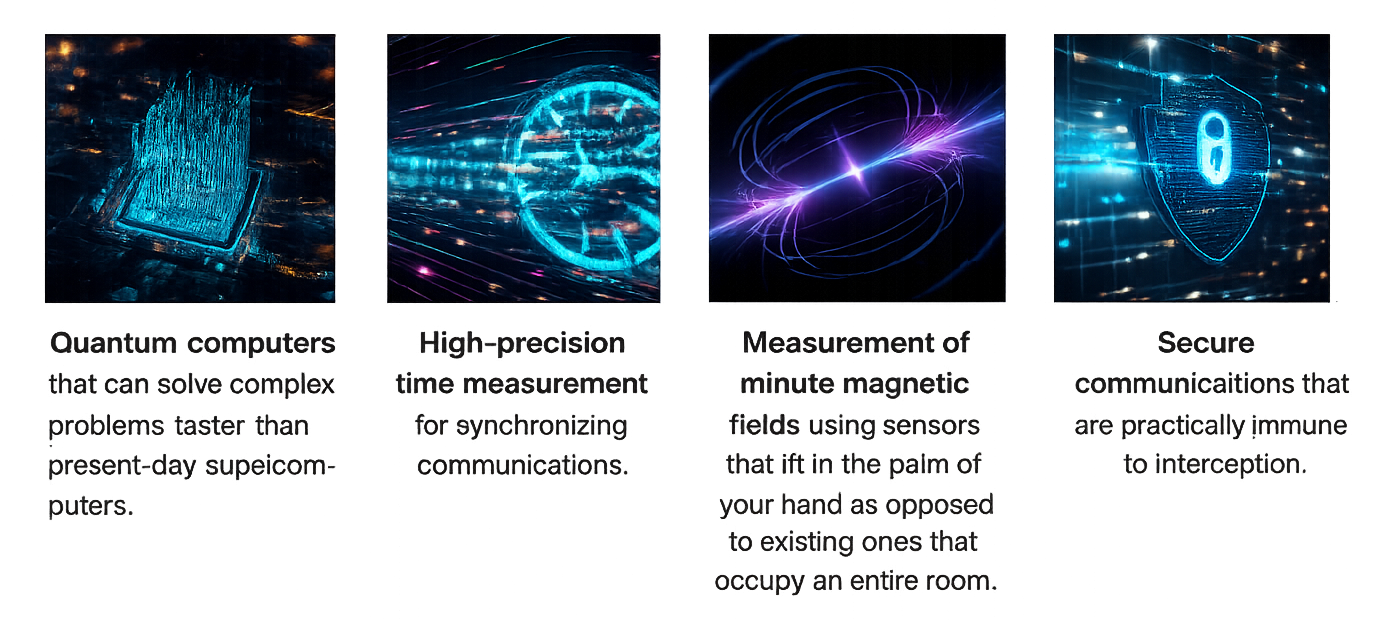
A few relatable examples include:
Central to all these quantum technologies is a medium that exhibits quantized behavior. In neutral atom computing, this medium consists of a collection of trapped atoms; in ion computing, it comprises trapped ions; and in certain types of atomic clocks, it is a collection of alkali atoms in vapor phase. Photonics technology plays a crucial role in interacting with and manipulating these delicate quantum media while also exhibiting quantized behavior and acting as a reliable carrier of information for networks of quantum devices.
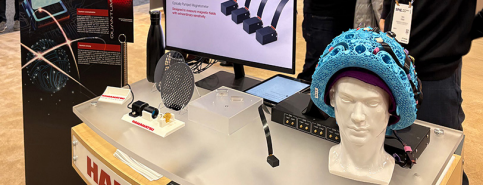
Cerca Magnetics [4] is evaluating OPM for Magnetic Encephalography (MEG). Photo from Hamamatsu Photonics booth at Photonics West 2025.
In other instances, such as in photonic quantum computing or quantum communications, individual photons themselves act as the quantized medium. In addition, photons can transfer information over long distances with minimal losses compared to electrons and they are unaffected by electromagnetic fields. In essence, photonics is integral to the advancement of several quantum technologies.
Hamamatsu Photonics: A trusted partner in quantum technologies
Since its inception, Hamamatsu Photonics has been a trusted partner of the scientific research community. As a result, the company has developed some of the best photonic technologies available today and continues to lead in this path. At the same time, Hamamatsu is no stranger to the requirements of industrial, medical, and semiconductor applications, which are also key markets. High-volume production and quality control of robust optoelectronic products and systems are an integral part of Hamamatsu's business. With its legacy, expertise, and capabilities, Hamamatsu Photonics is well-positioned to be a photonics partner in the development of quantum technologies.
Vapor cell technology: A key contribution to quantum innovation
One shining example of Hamamatsu's contribution to quantum technologies is its vapor cell technology. In the photonics world, Hamamatsu Photonics is synonymous with photomultiplier tubes (PMTs) which are based on vacuum tube technology. Building on this legacy, the company has developed deep expertise in manufacturing vapor cells of different shapes and sizes, with different coatings, and containing diverse trapped alkali vapors and buffer gases.
When combined with light sources, detectors, optical elements, and electronics, these vapor cells can be molded into quantum sensors for certain applications. Hamamatsu recently presented its optically pumped magnetometer (OPM) at Photonics West 2025 based on this vapor cell technology. This OPM, packed into a compact volume of less than 8.5 cm³, boasts a magnetic field sensitivity of $20\text{ fT}/\sqrt{\text{Hz}}$, making it suitable for biomedical functional imaging.
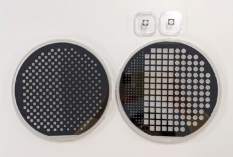
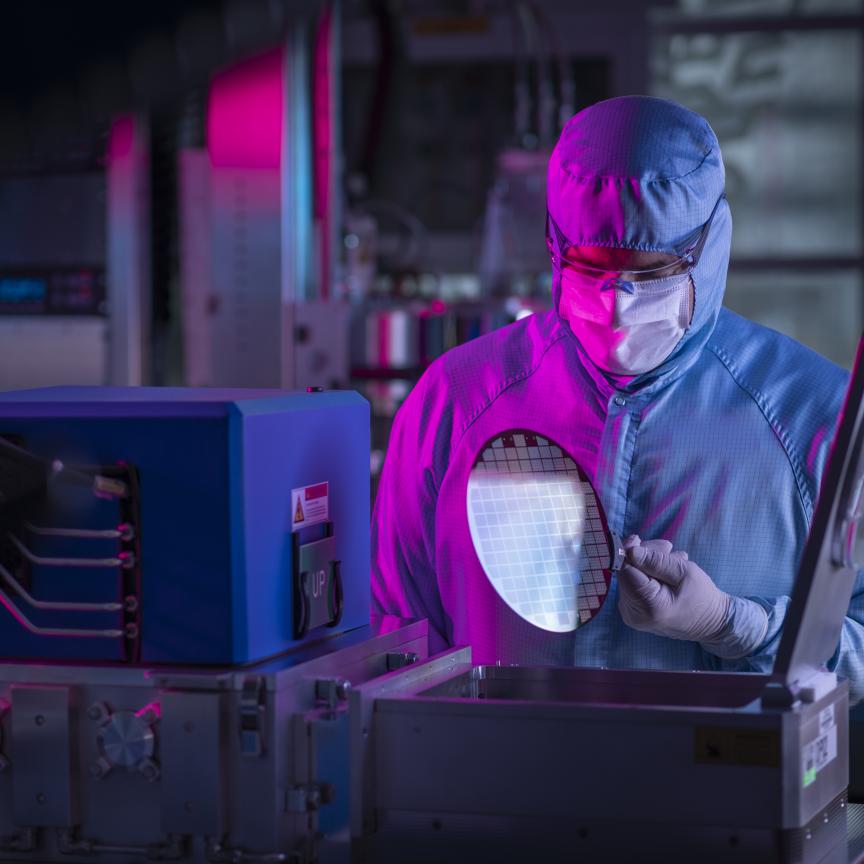
Hamamatsu’s wafer based vapor cells
Hamamatsu is working with Cerca Magnetics, a start-up from the University of Nottingham, to commercialize OPM for Magnetic Encephalography (MEG), which noninvasively maps neuronal activity of the brain. The compact size of OPMs allows them to be assembled onto a 3D-printed headset, making MEG measurements more lightweight, portable, and comfortable for patients. OPM revolutionizes MEG measurements when one compares it to the existing MEG machinery that relies on a large, liquid Helium-based magnetic sensor.
Beyond vapor cells: Hamamatsu's extensive quantum portfolio
Hamamatsu's contributions to quantum technologies extend beyond vapor cell technology. A few notable innovations include:
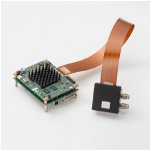
- Liquid Crystal on Silicon Spatial Light Modulators (LCOS SLMs): Used to trap large numbers of atoms for neutral atom computing. Hamamatsu's LCOS SLMs are known for their low phase jitter, ensuring stable traps, and high laser power handling, which aids in scaling up quantum computers.
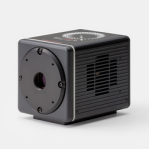
High-Speed, Low-Noise Cameras for Qubit Readout: Neutral atom computers require constant monitoring of trap stability and qubit states, accomplished using Hamamatsu cameras. The latest aCMOS® technology provides a unique combination of precision, speed, and resolution. The ORCA® camera series is used for diagnosing traps or determining the precise number of photons absorbed in quantum imaging. Recently, Hamamatsu partnered with Quantum Machines to integrate ORCA cameras into their hardware.
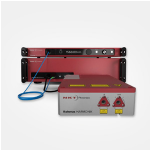
Single-Frequency Lasers for Quantum State Manipulation: Used to manipulate quantum states in computers and atomic clocks. With the acquisition of NKT Photonics, Hamamatsu offers a range of single-frequency, mode-hop-free, and ultra-stable fiber lasers. The Koheras HARMONIK HP series provides high-power UV & VIS fiber lasers known for narrow linewidth and industrial reliability.
Commitment to quantum innovation and collaboration
Hamamatsu's commitment to advancing quantum technologies is evident through these innovations and partnerships. Beyond these examples, the company continues developing cutting-edge photonic solutions tailored for quantum applications. Our engineers are always keen to discuss these technologies as well as custom solutions through one-to-one interactions.
If you would like to explore collaboration opportunities or learn more about our offerings, please reach out to us at info@hamamatsu.eu and drop by our booth at the Laser World of Photonics this June at Messe Munich.