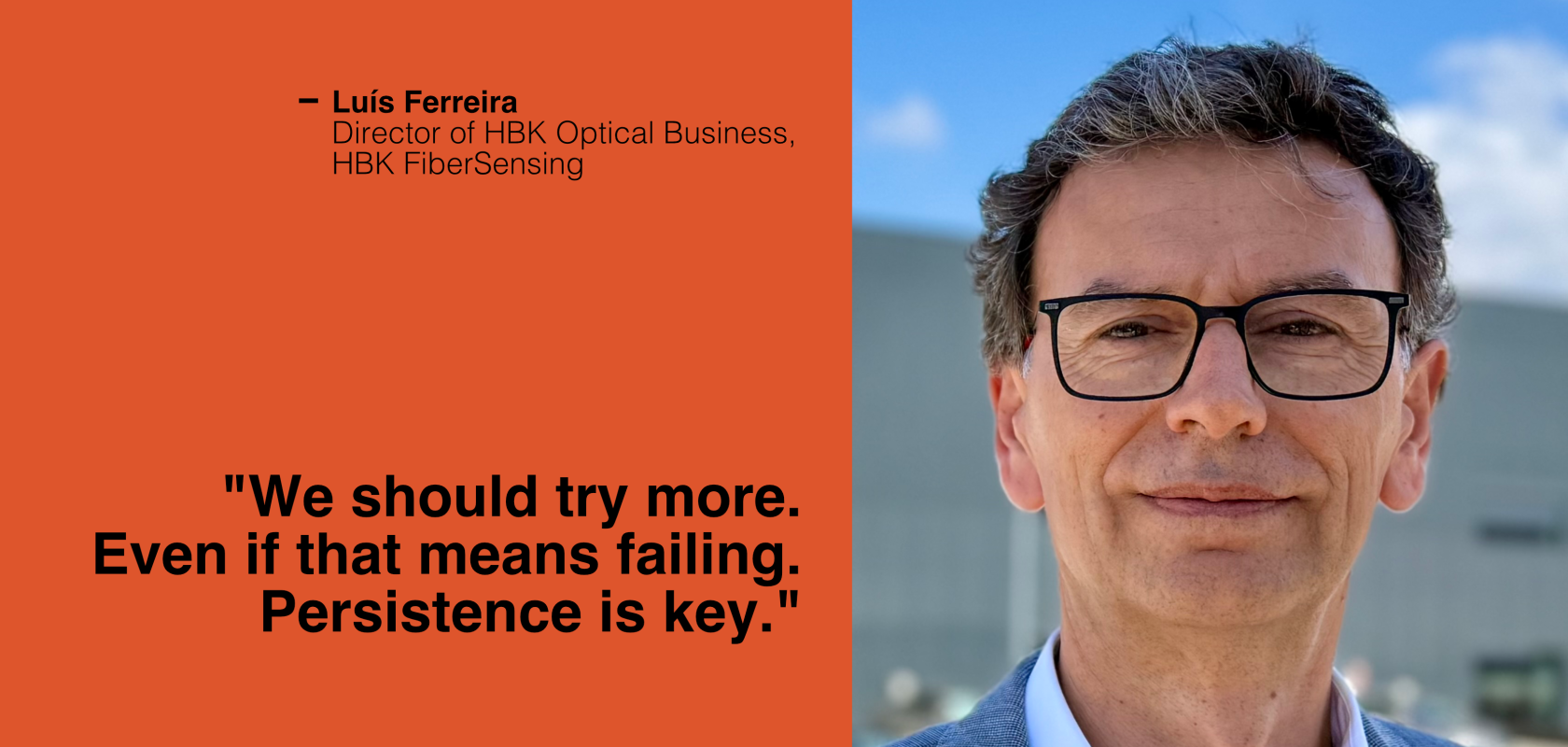
From launching a fibre sensing spin-off during the dot-com era to leading HBK’s global optical business, Luís Ferreira has helped shape the growth of FBG sensing technologies for infrastructure and industrial monitoring. He talks to EPIC’s Antonio Castelo about entrepreneurship, scaling photonics businesses, the future of fibre optic sensing and why persistence matters in deep tech.
Antonio Castelo: What’s the background to you becoming Director of HBK Optical Business?
Luís Ferrera: In 1996, after completing a BSc and an MSc in Physics at the University of Porto, I began a PhD on fibre optic sensing. After that, because opportunities in industry in Portugal were limited, I taught Physics and Optics at the University for a couple of years.
I’d always wanted to move beyond academia and research and create something tangible, so in 2000, I joined Multiwave Networks, a spin-off from the University of Porto / INESC TEC research ecosystem, focussing on fibre optic laser sources. It was during the dot-com bubble, so everything was very intense. I was involved in everything – from development to fundraising, and it was a great learning experience.
After the dot-com bubble burst, things didn’t go well, so in July 2003, I went to work as a senior researcher at INESC TEC, an applied research and technology transfer institute. We had strong expertise in fibre optic sensing, especially fibre Bragg gratings (FBGs), and believing that we could turn the technology into real products and applications, in 2004, I and a group of colleagues founded FiberSensing as a spin-off from INESC TEC.
AC: What were your initial challenges?
LF: Although we had support in terms of facilities and people from the institute, we had to secure funding ourselves and even invest our own money. Our initial prototypes were FBG-based optical sensors, optical interrogators and integrated sensing systems thought for structural monitoring applications. After we’d demonstrated we could turn these prototypes into real products, in 2005, we secured a second round of venture capital, which allowed us to move to our own facilities in 2006.
While raising the funding was not that difficult, managing investors was harder because at that time VCs in Portugal behaved more like banks, focusing on returns and control rather than long-term development. They were also generalists, so they didn’t provide strategic support beyond funding.
On the financial side, we lacked enough resources to fully develop technology before entering the market. There were also technological challenges as many of our components were developed for telecom, not sensing. And like in any startup, we had to do everything – I found myself moving from development to sales and then to management, eventually becoming CEO.
Because Portugal is a small market, to find customers, we invested heavily in travel and attended around 10 to 12 exhibitions per year worldwide, as exhibitors. These were extremely important, and we still have customers today from that time.
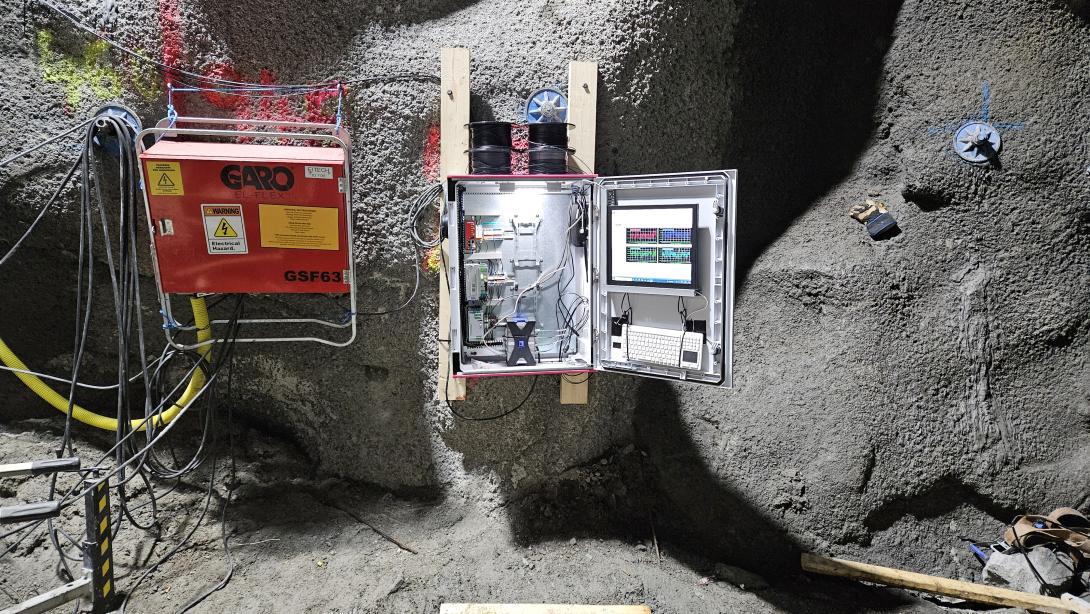
HBK FiberSensing’s best-selling products include sensors that monitor power generators and energy pipelines
AC: How did the company develop?
LF: In 2006, when we moved into our own facilities, we entered a phase of commercial and technological consolidation providing a full-stack offering comprising optical sensors, interrogators, software and complete monitoring systems. We targeted industrial applications particularly for harsh environments e.g., civil infrastructure, energy (wind power generators) and R&D (ITER).
By 2012, we had a workforce of around 35 people and had become recognised as a leader in FBG-based monitoring systems. But because we only had a small direct sales/support team and relied mainly on international distributors, it became clear that to scale effectively, we needed a strategic partner.
To this end, we worked with an advisory firm in London to approach potential buyers. At the same time, we were competing with Hottinger Baldwin Messtechnik (HBM) on projects, which brought us onto their radar. We were attracted to HBM because they were a good technology fit, a trusted brand in the conservative test and measurement industry and they had a global sales force with access to customers worldwide. We ended up being acquired by HBM in October 2014.
For a while, we were known as HBM FiberSensing. But in 2019, following HBM’s merger with Brüel & Kjær, our name changed to HBK FiberSensing, and I was appointed Director of HBK Optical Business.
AC: How has the business grown since the acquisition?
LF: We had an average annual growth of 15%. When HBK decided to invest in Porto they also brought in many business support and development functions such as software for other product lines of the company.
They also brought production of two classic product lines to Porto: a few types of strain gauges and customised load cells. These new lines now account for around 20 people, and for the other business support functions we have approximately 90 people. So nowadays in Porto, we have a total workforce of around 160 with 50 people dedicated to the Optical Business.
Since moving to new facilities in the Porto region in 2025, our office and production space has increased to about 8,000 square meters. Our customers are mostly from Europe, but they also come from the US, Japan, China and South East Asia and our main sources of income are from our sensing solutions for infrastructure and asset monitoring. Our best-selling products are sensors for spot welding to metallic structures and for embedding in concrete, interrogators, solutions for railways and the monitoring of power generators.
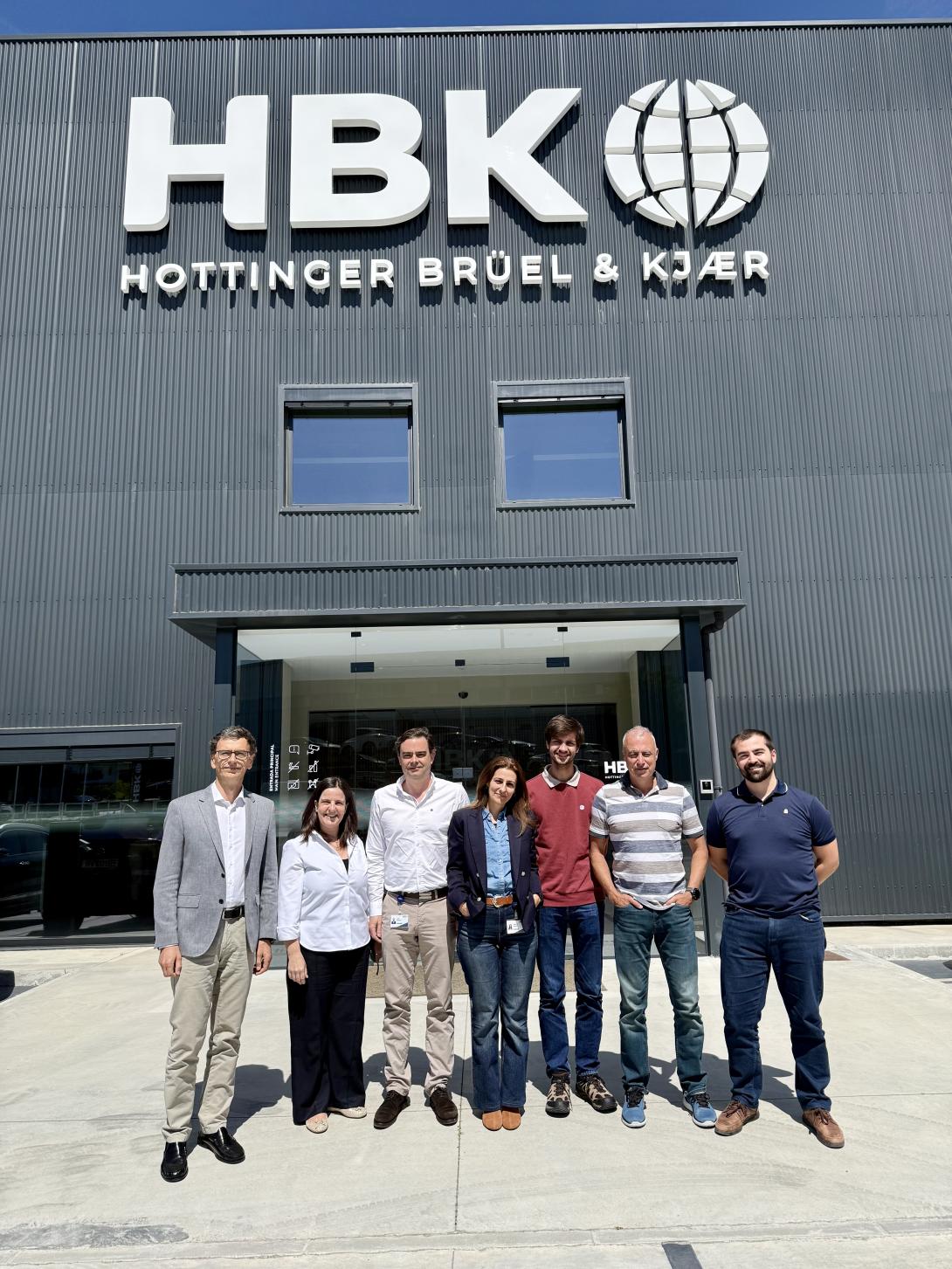
HBK FiberSensing has a total workforce of around 160 in Porto (Image: HBK FiberSensing)
AC: What have been your main challenges since HBK’s acquisition?
LF: HBK has more than 900 customer-facing employees, and one of our challenges is to find ways to have more of them working with us, while providing the necessary training to sell. The potential is huge, but the HBK product portfolio is also immense.
Another challenge is that fibre optical sensing, particularly FBG-based sensing, often requires a high level of customisation. While being part of HBK brings many advantages, like implementation of high-quality standards and better financial stability, its large multinational corporate structure also reduces our flexibility, when compared with smaller competing companies, to address customers wanting a fast response for customised solutions.
The other challenge is related to the adoption of AI technologies. Specifically, how to take advantage of the power of AI to increase the added value we give to our customers so that we can help them to better solve their problems and create more value on their side.
AC: How do you see the future for fibre optical sensing?
LF: I’m optimistic. The market will consolidate, but it will continue to grow. Fibre optic sensing solves unique problems, and costs will decrease, enabling broader adoption. The main growth markets will be the structural health monitoring of large infrastructures in respect of energy, pipelines, offshore wind and railways, but also monitoring critical assets in the defence area such as power and telecom submarine cables and critical pipelines. We are also exploring new technologies such as PICs and Distributed Fibre Optic Sensing, via acquisitions and mergers.
AC: What’s your advice for the next generation of entrepreneurs?
LF: It is essential to have dreams and to truly believe it is possible to achieve them. The journey will be like a roller coaster – with highs and lows – but it is very rewarding. Even if things don’t work out, you will learn and grow.
The big difference between European and the US is attitude. We should try more, even if that means failing more. Persistence is key.
On the financial side, make sure you’ve got enough investment behind you before bringing your technology to market, while ensuring a correct start-up shareholder structure so that founders get a fair benefit at a future exit moment. And if you get to the point where you are thinking of finding a strategic partner, make sure you select the right fit, with real business synergies. We were lucky from that point of view: HBK is a great company and a perfect home for the FiberSensing Optical portfolio. I’m proud of working at HBK and I love my job.
Finally, Photonics is a great field – people are generally collaborative and positive. But remember, the industry is an ecosystem – not just for customers, but also for suppliers, partners and innovation. For this reason, it’s essential to network – get support from professors, R&D institutions, VCs, innovation clusters and, crucially, attend industrial events like those held by EPIC.