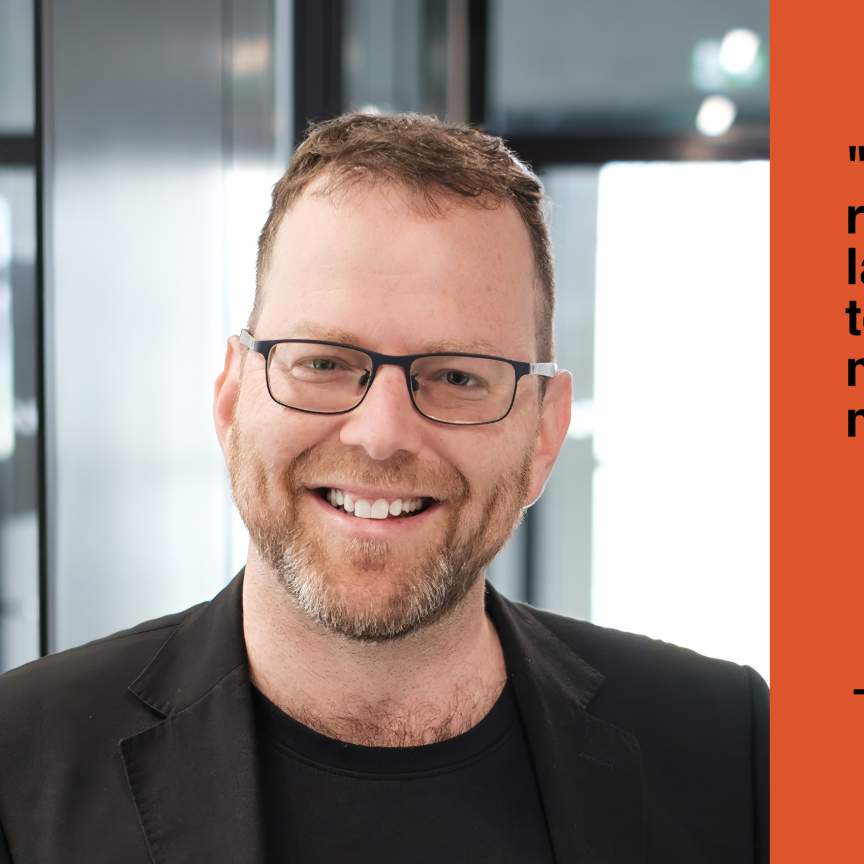

The photonics sector has spent years promoting itself as a transformative industry capable of improving everything from agriculture to healthcare. But according to Dr. Andrey Voloshin, who leads the Hamamatsu Photonics Pilot Line and serves as a senior associate with the company’s corporate venture capital team, our sector still has room to improve how it positions itself.
“I would say there is no photonics industry at all,” Voloshin says. It is a deliberately provocative statement, but one that sits at the heart of his argument about why growth across optoelectronics has not always matched expectations, and why weathering the current economic headwinds needs bolder thinking. “There are end user markets, and photonics is just a tool,” he explains. So, for Voloshin, even the language the sector uses is part of the problem. “I call it optoelectronics tools, not photonics,” he says. “If you go to real businesses and ask them, ‘would you buy a photonics instrument?’ they say, ‘No, I’m fine with optoelectronics'.”
His argument reflects a wider frustration within the industry: despite photonics technologies being embedded in smartphones, medical instruments, vehicles and communications systems, the term itself often fails to resonate outside specialist circles. “We should stop doing that,” Voloshin says of the sector’s constant attempts to promote photonics as a standalone industry.
However we bill it, he believes our current market challenges are the result of multiple overlapping pressures. Covid-era disruption still lingers, while geopolitical instability is affecting some investment confidence, and customers are increasingly cautious about committing to long-term development programmes. As a result, he believes many customers lack the capacity to plan significant optoelectronics investments years ahead. “Some companies don’t have enough long-term planning,” he says. “They don’t always appear to budget for new developments, which I understand.”
But Voloshin believes the issue is not purely economic, but cultural. He points to photonic integrated circuits (PICs) as an example of a technology where expectations have sometimes run ahead of commercial readiness. “PICs have enormous potential, including for applications such as agricultural methane sensing,” he says. “But in some cases, the market messaging moved faster than the availability of robust, purchasable solutions. When end users look for products today and cannot yet find something that meets their practical requirements, it creates a gap between expectation and reality.” He argues some application narratives around PICs ran ahead of product availability.
Selling outcomes, not photons
Voloshin repeatedly returns to one central idea: optoelectronics companies should stop focusing on the technical brilliance of their components and instead communicate the value they create for end users. “We have to promote the value of our tools,” he says. “When you sell nails, no one cares about the surface of a nail cap and the weight of a nail. We promote the fact that you can build your house 20 times faster using our nails and your house will last for 20 years. In this example, there is no nail industry,” he adds. “There is a real estate industry.”
For Voloshin, the future growth of optoelectronics therefore depends on learning how to better speak the language of target industries. “We are optical engineers, optoelectronic engineers, photonic engineers,” he says. “We know everything about photons and photonics, but we have to go to other industries and speak their language and their culture.” He suspects many photonics companies still operate in isolation, developing technologies first and only later searching for applications. “We have to take our roadmaps in connection with real-world challenges,” he says.
That philosophy has become central to Hamamatsu’s Pilot Line initiative. It was established to help bridge the gap between advanced optoelectronic technologies and practical commercial deployment. According to Voloshin, one of the programme’s biggest challenges has been engaging directly with customers who have little or no experience with photonics. “For the first time, we spoke with customers who had zero experience with photonics,” he says.
Instead of discussing detector specifications or photonic architectures, the team focused on applications and problems that customers were trying to solve. “We had to speak application-wise,” he explains. That approach quickly revealed another challenge: no single company can deliver complex application-specific solutions alone. “To make new products that serve some particular function, we need support from multiple external partners because it relies on a quite big ecosystem,” Voloshin says. The programme now works across multiple Hamamatsu divisions, bringing together expertise in areas such as photodetectors, laser sources, electronics and systems engineering.
“This is cross-divisional collaboration,” he says. The two-year-old initiative has also highlighted the importance of communication skills inside engineering-led organisations. “We identified that we need more people with strong soft skills that can put diverse teams on the same page,” Voloshin says.
He describes a process where customer requirements must effectively be translated into several different organisational languages. “You have to translate it into the language of an optoelectronic engineer, then into the language of the electrical engineering department, then into the language of the business planning group,” he explains. The Hamamatsu Photonics solution has been to create ‘multi-dimensional’ documentation tailored to different teams while still centred on the same project. “It can be organic, evolutionary change for our industry,” he says. “Not disruption.”
One of the Pilot Line’s most significant achievements has been supporting researchers and innovators outside traditional photonics fields. “Over two years, around 100 submissions from diverse industries have come from people who one might characterise as having no clue how to use photonics,” Voloshin says. Many of these ideas originate in chemistry, biology and medical research, where scientists may identify valuable use cases but lack the instrumentation expertise needed to commercialise them.
“Anyone can have a bright idea but not anyone can have the budget to bring this idea to life,” he says. The project’s role has been to provide both technical guidance and access to a broader industrial ecosystem. “With our expertise in photonics technologies,” Voloshin says, “we give them a roadmap on how to build an optoelectronic module system for their task.”
The broader goal, he says, is to unlock new markets by embedding optoelectronics into real-world industrial challenges, rather than treating photonics as an end in itself. “We have to detach from the vision that photonics is the end goal,” Voloshin says.
Surviving the storm
Voloshin acknowledges that the current market remains difficult, particularly for smaller companies. “For bigger companies, we have ways to survive it,” he says. “For smaller companies this could be a lethal event.” Despite the turbulence, Voloshin remains optimistic about the long-term outlook – but only if the sector changes its mindset. “If smaller companies continue thinking about photonics as a holy grail – almost as the value itself – then I’m pessimistic,” he says.
Among the technologies that genuinely excite him, Voloshin highlights distributed fibre optic sensing. “The application opportunities are insane,” he says. He points to railway monitoring, oil pipelines, perimeter security and infrastructure monitoring as areas where the technology can deliver clear commercial value. “You have a sensor to detect any kind of events – temperature events, vibration events next to railways, oil pipelines, airfield fences, anything,” he says.
He is also enthusiastic about the future role of micro-optics. “We don’t utilise enough micro-optics,” he argues. While much of the current discussion centres on silicon photonics, Voloshin notes that many high-performance coherent transceivers still depend on micro-optical components, particularly at the packaging and optical-interface level. “There is no need to make a photonic integrated circuit for some applications,” he says. “Micro-optics can be good enough.”
For Voloshin, the message is ultimately simple: optoelectronics will only grow when it stops promoting itself as a standalone field and instead becomes even more embedded in solving meaningful industrial problems.