Laser-induced breakdown spectroscopy (LIBS) has rapidly progressed over the last decade, transforming from a laboratory‑bound technique into a widely adopted solution for fast, on‑site elemental analysis.
This progression has been driven by major advancements in compact, high‑performance components, particularly lasers and spectrometers. These enable portable LIBS systems to deliver laboratory‑level precision in a broad variety of environments. Hamamatsu’s WS Series spectrometers support this shift, providing the high resolution, broad spectral coverage, speed, and stability essential for advanced, field‑ready LIBS instrumentation.
Why spectrometer performance matters in LIBS
At the core of LIBS is a short, intense laser pulse to generate a microplasma at the surface of a sample. As this plasma cools, excited atoms and ions return to lower energy states, emitting sharp, element‑specific spectral lines. These emissions act as a fingerprint of the sample’s chemistry, enabling the spectrometer to determine elemental composition within seconds, often without any sample preparation.
Within the first hundred nanoseconds after plasma formation the emission is dominated by intense broadband continuum radiation. For this reason, detectors typically introduce a brief delay of around one microsecond to capture cleaner, discrete atomic and ionic lines. Achieving accurate results therefore depends on a spectrometer that can resolve narrow spectral features, collect fleeting optical signals, and provide sufficient wavelength coverage to encompass the emission lines required for analysis.
What makes LIBS different?
LIBS holds several advantages over other portable elemental analysis techniques:
- No sample preparation: LIBS can analyse raw, in-place materials without grinding, dissolving, or chemical treatments.
- Speed: A complete measurement often takes only a few seconds.
- Access to light elements: Elements like hydrogen, lithium, beryllium, carbon, nitrogen, and oxygen are readily detected. This is an area where other portable techniques struggle.
- Flexible measurement strategies: LIBS can scan across a surface, probe different depths, and examine thin coatings without interference from underlying substrates.
- Broad applicability: The technique works across metals, plastics, glasses, soils, biological matrices, ceramics, paints, semiconductors, and more.
Typical detection limits for many heavy metals fall within the low parts‑per‑million range, making LIBS suitable for both qualitative identifications and quantitative assessments.
Advances enabling field‑ready LIBS
Historically, LIBS systems remained confined to laboratories due to bulky, power‑intensive hardware that was highly sensitive to environmental variation. This changed with major innovation in compact laser technology. Modern field‑ready LIBS devices now use miniaturised, battery‑operated lasers capable of delivering several millijoules of nanosecond‑pulse energy at high repetition rates, while maintaining stability over wide temperature ranges. Stable, repeatable plasma formation is essential for generating high‑quality data in real‑world environments.
Today’s handheld LIBS instruments match or exceed the performance traditionally associated with mobile spark Optical Emission Spectroscopy (spark OES) units. In many scenarios, they also complement or surpass handheld X‑ray fluorescence (XRF) systems. As a result, LIBS has gained significant traction across welding operations, petrochemical processing, alloy production, mineral resource exploration, and other industrial workflows that require frequent, fast, and accurate compositional verification.
Where LIBS is used today?
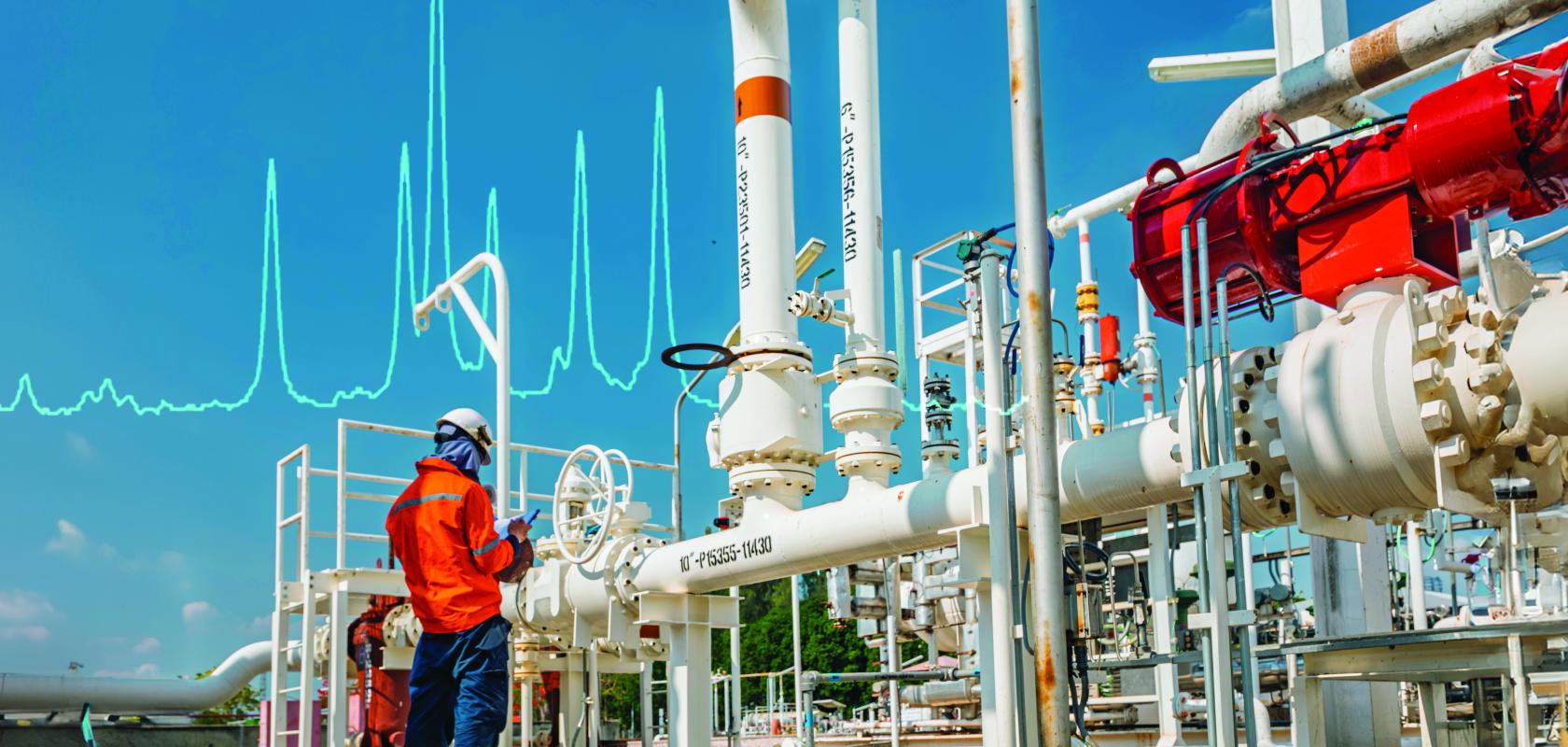
LIBS has established itself as an indispensable tool for industries that demand rapid and reliable elemental data. Its ability to quantify carbon in steels and stainless steels is particularly valuable for the oil and gas, petrochemical, and metal fabrication sectors. Accurate carbon measurement enables operators to assess weldability, corrosion resistance, and alloy certification. LIBS allows technicians to validate alloy chemistry directly on piping, valves, and fabricated structures, calculate carbon equivalency within seconds, and rapidly inspect materials throughout manufacturing and maintenance operations.
In the scrap‑metal recycling industry, LIBS plays an increasingly central role. Fast sorting and precise discrimination between similar grades, such as 316 and 316, directly affects profitability, compliance, and inventory control. LIBS also assists in detecting trace contaminants that influence downstream processing outcomes.
Beyond metals, LIBS has become essential in the electric‑vehicle and battery‑materials supply chain. Its capability to measure lithium concentrations in soils, rocks, and brines in real time has made it a critical tool for both exploration and recycling as global demand for battery metals accelerates. The same analytical strengths benefit academic and industrial research programs investigating new materials, coatings, and process optimisations.
The WS Series: Spectrometers engineered for LIBS
LIBS performance relies heavily on the spectrometer’s characteristics, and different applications focus on different emission lines. Hamamatsu’s WS Series is designed to offer developers the flexibility to optimise wavelength coverage and resolution for their specific needs.
Across the WS lineup, users benefit from:
- High spectral resolution for resolving narrow emission lines.
- Broad, customisable wavelength coverage for capturing relevant elemental signatures.
- High throughput to detect fast, faint plasma emissions.
- Wide dynamic range to accommodate both strong and weak lines in a single acquisition.
- Outstanding wavelength stability under changing environmental conditions.
- Compact, robust construction ideal for handheld and industrial instruments.
A new generation of field‑ready LIBS
LIBS has matured into a versatile, field‑deployable analytical technique used across traditional manufacturing sectors and emerging industries focused on energy, environmental sustainability, and advanced materials.
With applications diversifying, the demand for compact, stable, high‑performance spectrometers continues to rise. Hamamatsu’s WS Series meets these needs, delivering the precision and reliability required for portable, laboratory‑based, and process‑integrated LIBS systems.