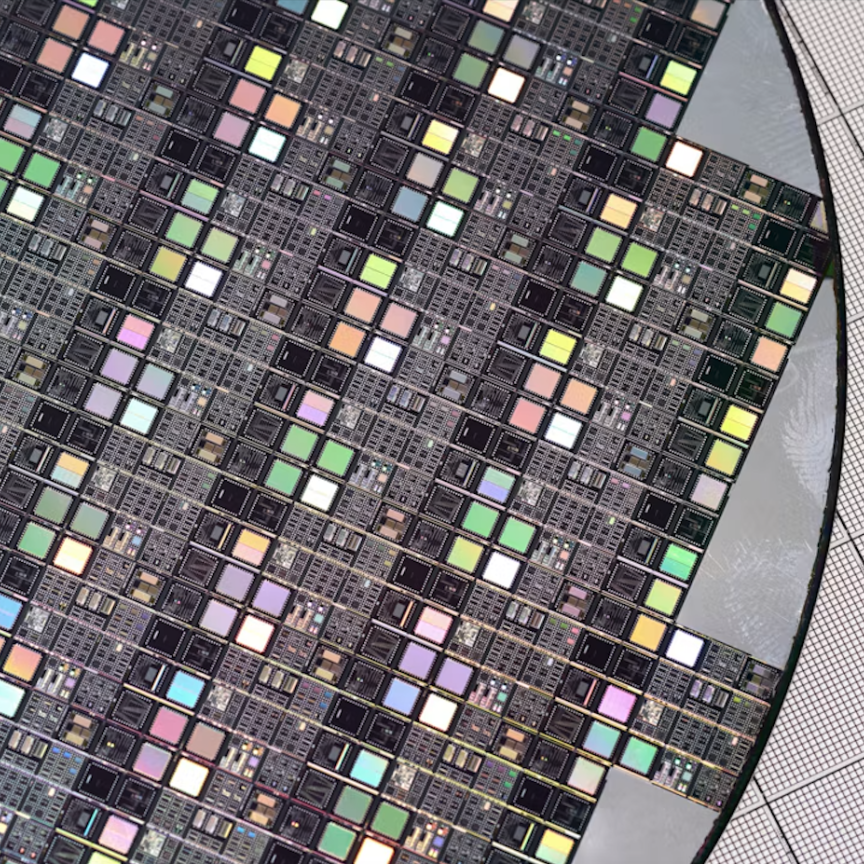
Rethinking laser illumination for advanced microscopy
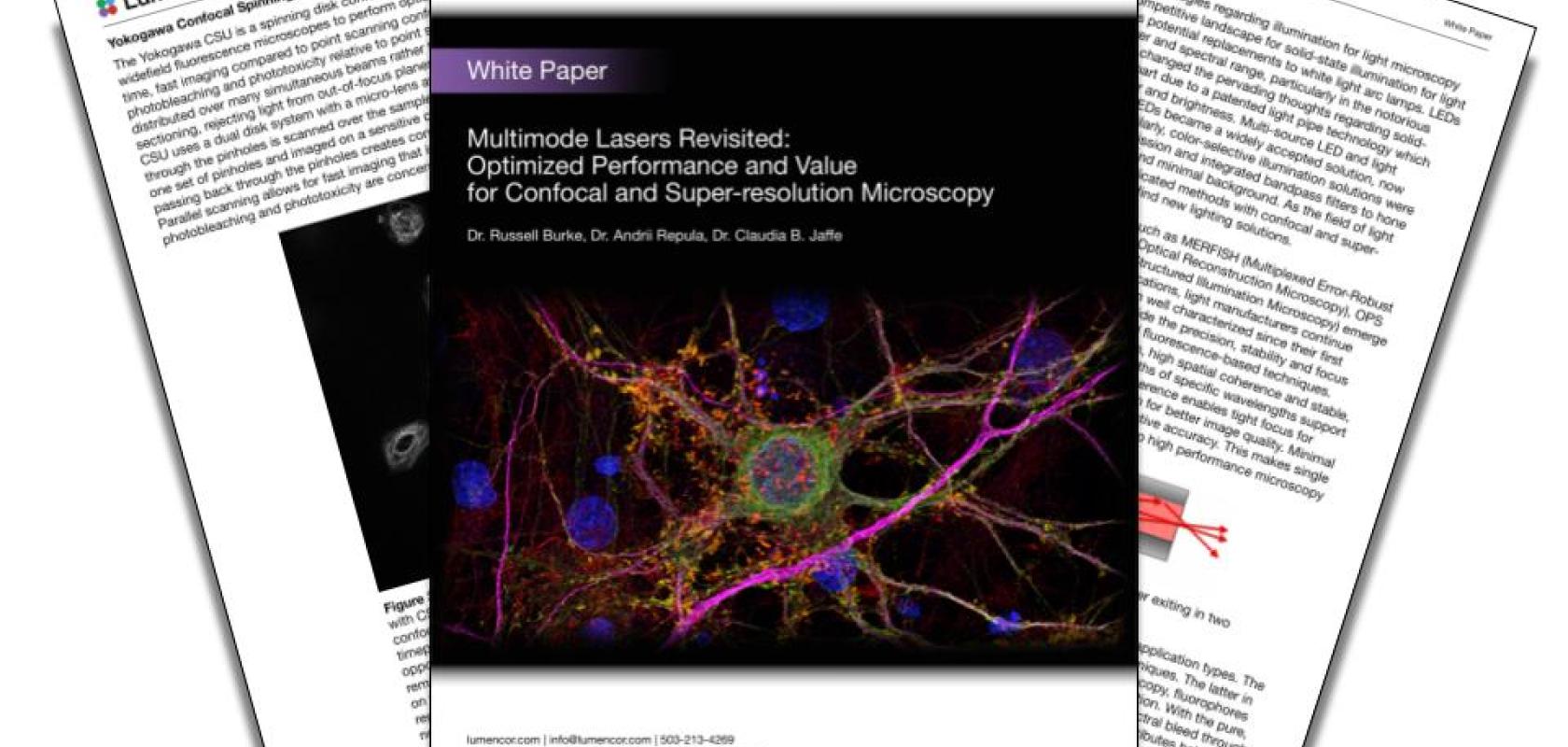
Multimode Lasers Revisited: Optimized Performance and Value for Confocal and Super-resolution Microscopy - A Lumencor White Paper
Lower cost. Longer lifetime. High-performance imaging without compromise.
Confocal and super-resolution microscopy techniques are evolving rapidly — but traditional single mode laser systems continue to present major cost, complexity and maintenance challenges for research laboratories.
This White Paper explores how multimode laser technology is redefining what’s possible for advanced fluorescence microscopy, delivering high-performance illumination with greater flexibility, lower operational costs and longer system lifetimes.
Produced by Lumencor, the report reveals how next-generation multimode laser Light Engines are overcoming the historical limitations of multimode illumination in confocal and super-resolution imaging applications.
Inside the White Paper
Discover:
- Why single mode laser systems remain expensive and difficult to maintain
- How multimode lasers are enabling high-performance confocal and super-resolution imaging
- The advantages of multimode illumination for STORM, SoRa and spinning disk confocal microscopy
- How Lumencor’s ZIVA and CELESTA Light Engines deliver stable, high-intensity illumination
- Why multimode lasers can reduce replacement costs and extend operational lifetimes
- The importance of laser stability, spectral precision and pulse-to-pulse consistency
- How researchers can improve imaging performance while optimising budgets
Explore next-generation microscopy applications
The White Paper examines how multimode laser technologies support advanced imaging techniques including:
- Confocal microscopy
- Spinning disk confocal imaging
- STORM microscopy
- SoRa super-resolution imaging
- SIM
- TIRF
- MERFISH
- PALM
- STED
Featuring real-world imaging examples and performance data, the report demonstrates how multimode lasers are moving beyond traditional widefield applications into advanced microscopy workflows once dominated by single mode lasers.
Why this matters
As microscopy techniques become more sophisticated, research teams face increasing pressure to balance:
- Imaging precision
- System stability
- Acquisition speed
- Operational simplicity
- Budget constraints
- Long-term maintenance costs
Traditional laser systems often require costly replacements every few years. This White Paper shows how modern multimode laser systems can deliver the performance needed for advanced imaging applications while significantly improving value and longevity.
Learn how multimode lasers are changing advanced microscopy
Inside, you’ll learn how Lumencor engineered multimode laser solutions capable of:
- High brightness illumination
- Fast switching times
- Excellent long-term stability
- Broad spectral coverage
- Compact system footprints
- Turnkey operation with minimal maintenance
The report also explores how multimode systems can democratise access to advanced optical imaging techniques by reducing the barriers traditionally associated with high-end microscopy illumination.
Who should download?
Ideal for:
- Microscopy researchers
- Imaging scientists
- Core facility managers
- Life science laboratories
- Fluorescence microscopy specialists
- Optical engineers
- Biomedical researchers
- Confocal and super-resolution imaging users
Download the White Paper
Discover how multimode laser technology is reshaping the future of confocal and super-resolution microscopy.
Download now to explore the performance, stability and cost advantages of next-generation multimode laser illumination.