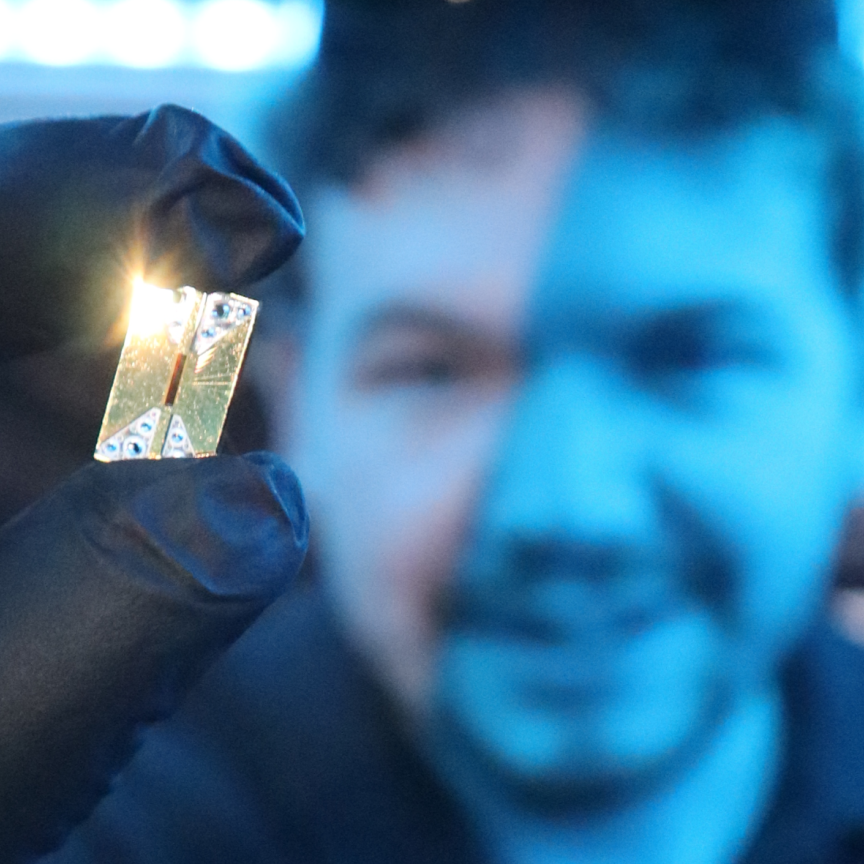
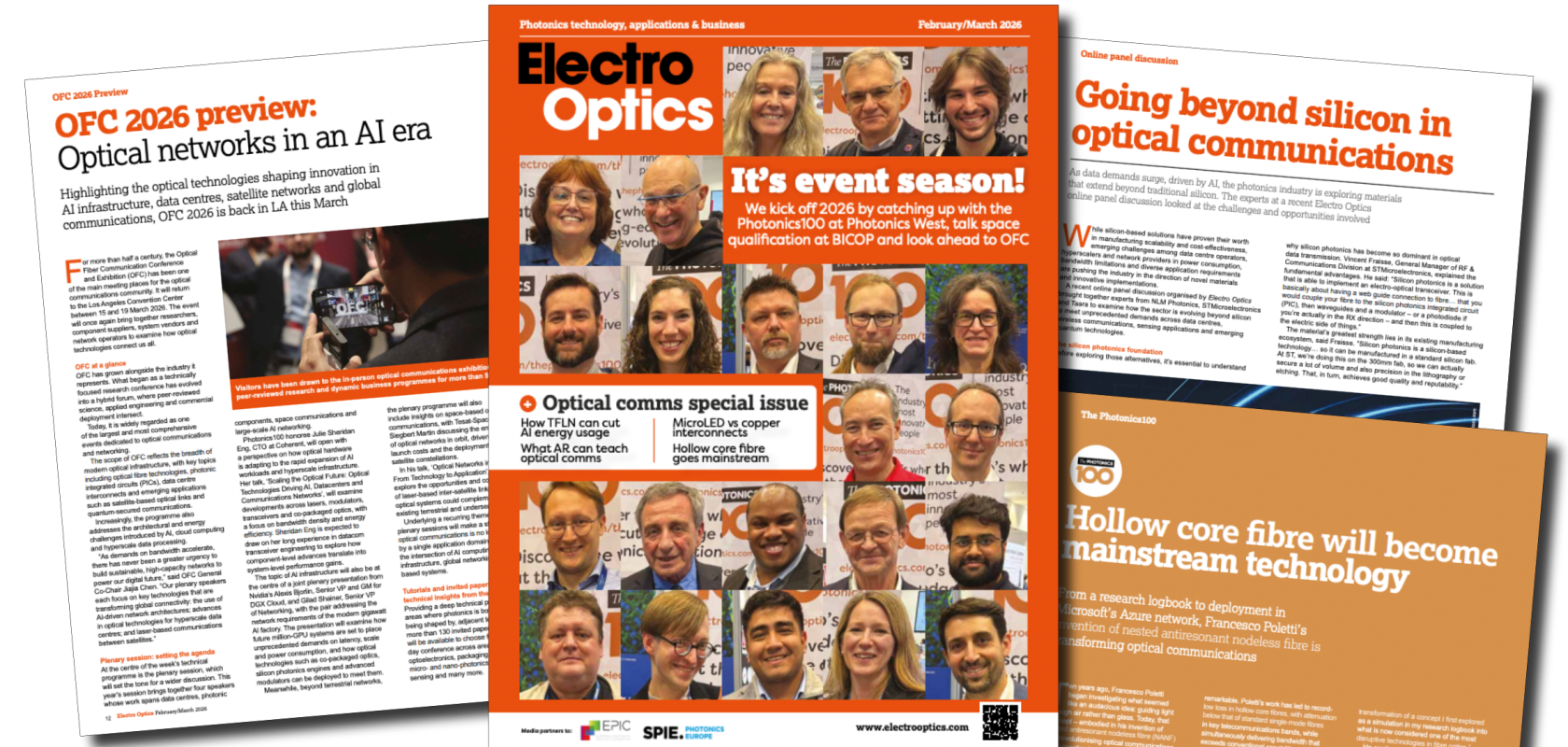
For any relationship to work communication is key, and this optical communications issue of Electro Optics falls head over heels for the technologies powering our connected world. From hollow core fibre and photonic AI processors to space-ready testing and post-silicon materials, it’s a love story written in light.
Love might well be in the air, but it's not alone as the Feb/Mar 2026 issue of Electro Optics focuses on free-space optical communications. Whether you’re swooning over optical networks, flirting with lithium niobate, or committed to lifetime laser support, this issue proves that light and long-term relationships go hand in hand.

Participants from all corners of the globe have been drawn to OFC’s high-impact, peer-reviewed research, dynamic business programmes and in-person optical communications exhibition for over 50 years, say the organisers (Image: OFC)
Trade shows stealing the spotlight
We begin with a look back at Photonics West 2026, where scale, strategy and serious momentum took centre stage. As the community waves goodbye to San Francisco for another year, the message is clear: photonics is growing up, scaling up and gearing up. From integrated and biophotonics to production-line investments, the industry isn’t just talking about the future, it’s building it.
Looking ahead, our OFC 2026 preview heads to Los Angeles, where optical communications meets the AI era. With cloud computing, hyperscale data centres and machine learning workloads pushing networks to their limits, OFC will explore how photonics is keeping global connectivity in sync.
And from convention halls to launch pads, BICOP2025 heard from RAL Space’s Rebecca Harwin on how smart testing can fast-track optical technologies into orbit. When it comes to space hardware, it turns out the best relationships are built on trust, trials and a little real-world experience.
First dates with the experts
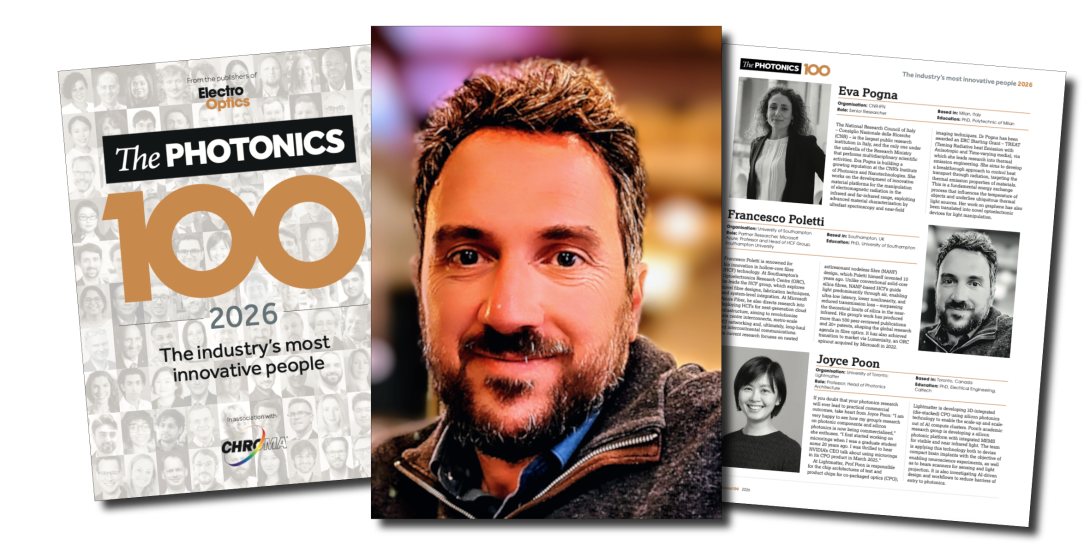
This issue’s interviews are all about having good communication. First up, Photonics100 honouree Francesco Poletti reflects on hollow core fibre’s journey from research curiosity to real-world deployment in Microsoft’s Azure network. His nested anti resonant nodules fibre might have started in a lab notebook, but it’s quickly becoming mainstream.
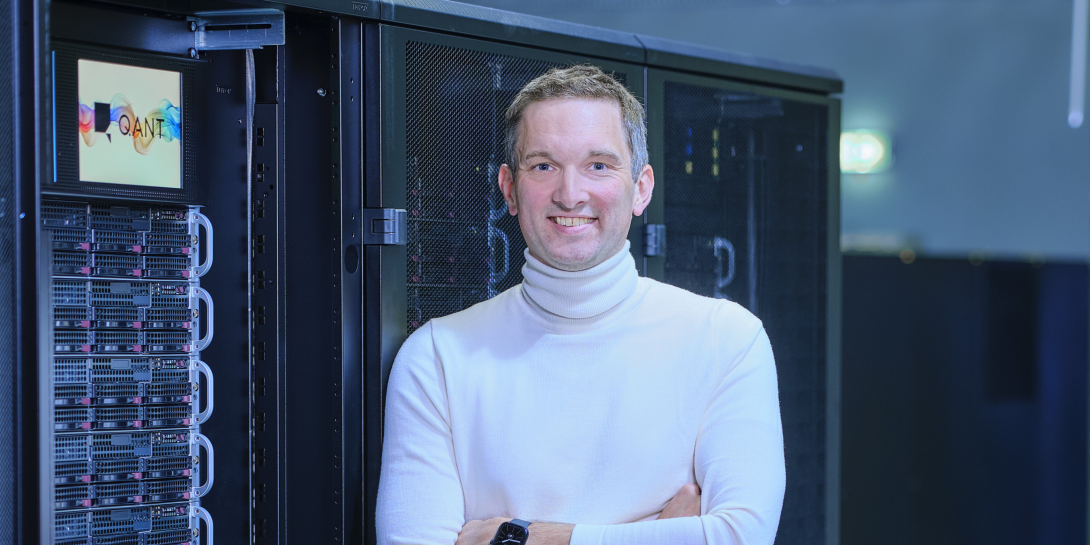
Dr. Michael Fortsch at the server (Image: Q.ANT)
Meanwhile, Michael Fortsch of Q.ANT explains why betting early on thin-film lithium niobate (TFLN) has given his company a head start in making photonic processors practical. With promises of slashing AI’s energy appetite, Q.ANT is redefining high-performance computing for a post-silicon era.
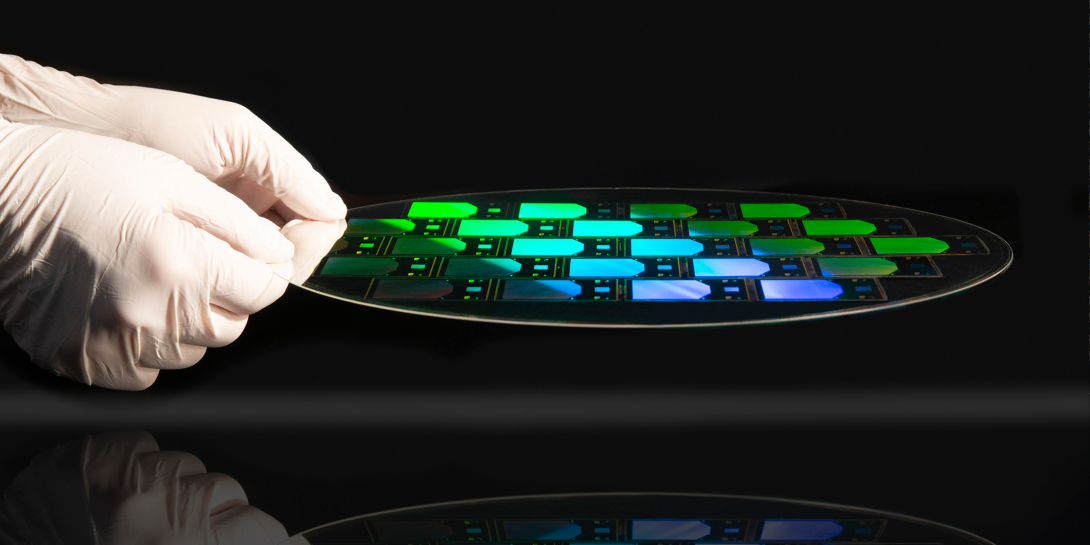
The step-and-repeat nanoimprint lithography system can be scaled to a fully populated 300mm wafer (Image: EV Group)
At EV Group, Bernd Dielacher reveals how advances in nanoimprint lithography and hybrid bonding are taking augmented reality from prototype passion project to commercial commitment. Many AR capabilities, he argues, are directly transferable – especially into optical communications.
Beyond silicon, beyond copper
If silicon had a long reign as photonics’ steady partner, this issue asks: is it time to see other materials? Our online panel discussion on ‘Going Beyond Silicon in Optical Communications’ gathered experts from STMicroelectronics, NLM Photonics and Taara to debate the challenges and opportunities of alternative platforms. As data demands surge under AI’s watchful gaze, is extending performance beyond traditional silicon necessary?

Wireless optical communications means extending fibre-like speeds where fibre can’t reach such as remote areas (Image: Pixabay mercierzeng)
Fresh from the talk, Taara’s Devin Brinkley returned to explore the real-world engineering challenges behind high-speed wireless optical connectivity. As fibre alone struggles to bridge the digital divide, free-space optical links could provide the missing spark – if the practical hurdles can be overcome.
And in another byline, Jess Brown of Avicena argues that when it comes to AI compute, it’s time to scale up. Replacing copper interconnects with microLED-based optical links could be critical to keeping next-generation systems cool, efficient and scalable. In short: It’s not you, copper, it’s your bandwidth.
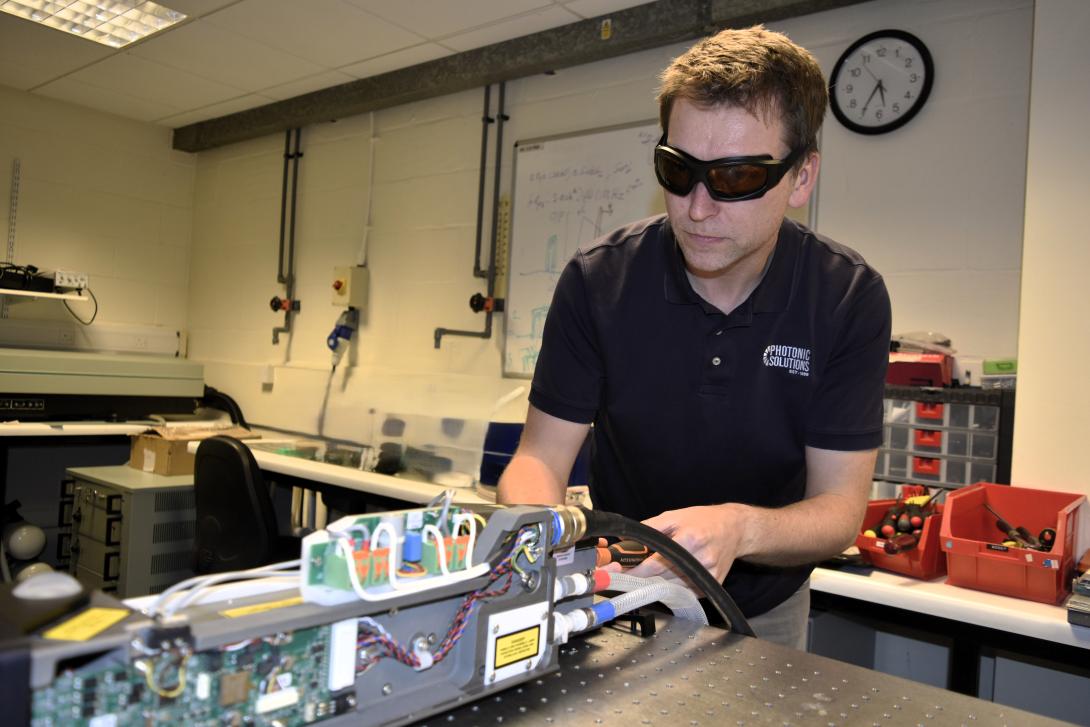
Douglas McRobbie, Service Team Manager at Photonic Solutions, pictured in the company’s laboratory facility (Credit: Photonic Solutions)
Long-term commitments
Not every story in photonics is about the next big breakthrough. Some are about sticking around. In his opinion piece, Douglas McRobbie of Photonic Solutions makes the case for lifetime support in complex laser systems. In a sector where equipment can operate for decades, deep expertise and long-term partnerships matter just as much as the initial sale.
Meanwhile, in his regular column, EPIC’s Carlos Lee examines the special relationship between Europe and the US when it comes to photonics, and urges both parties not to drift apart at a time of geopolitical uncertainty. Cross-Atlantic collaboration, he suggests, remains vital to innovation.
And in another exclusive interview, EPIC’s Antonio Castelo sits down with Foad Shaikhzadeh, Chairman and CEO of Lightera, to discuss the ambitious 2025 merger that united Furukawa Electric’s regional optical solutions into a single global force. From regional rivals to industry power couple, Lightera’s story shows how consolidation can create strength.
Ready to commit?
From fibre breakthroughs and AI-ready processors to global mergers and orbit-bound optics, the Feb/Mar 2026 issue of Electro Optics is packed with stories that prove photonics isn’t just having a moment, it’s building a future.
All these features and more are available in the latest issue of Electro Optics and online at electrooptics.com. So whether you’re deep in R&D, scaling up production or simply looking to stay one beam ahead, fall in love with light.